Light and openness
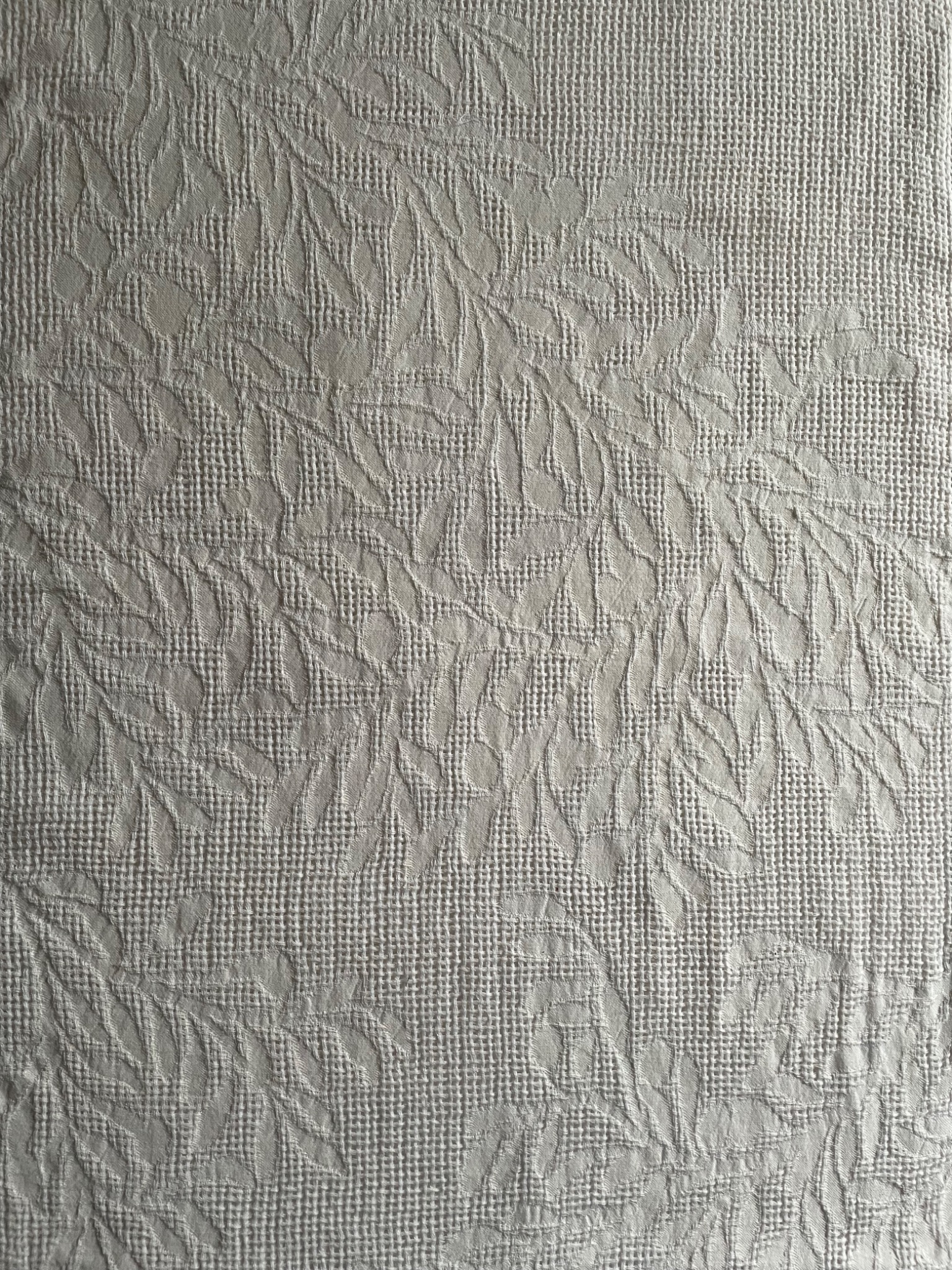
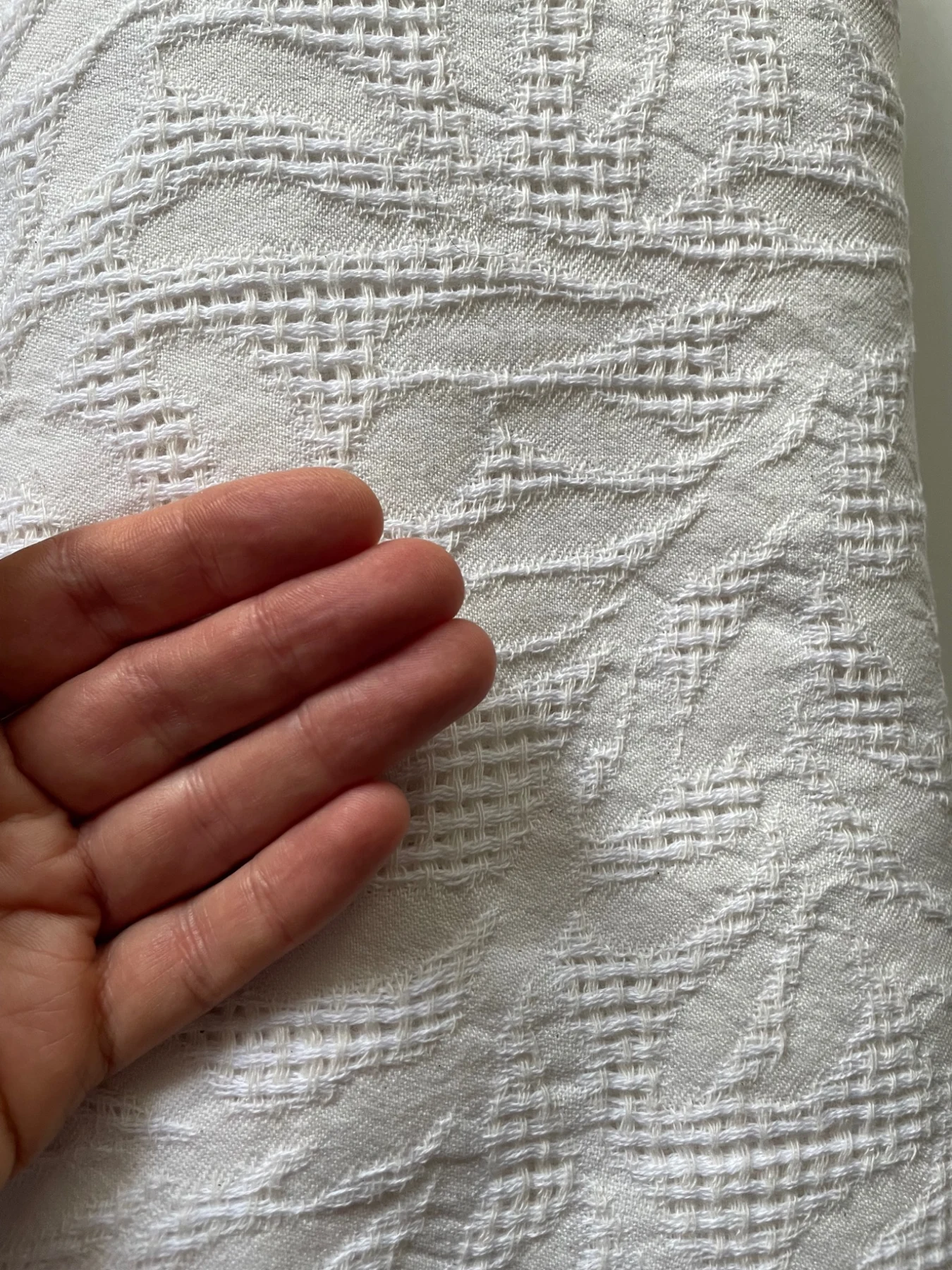
Pale wall textiles hold olive leaves, keys and fields awaiting embroidery. Light passing through their open areas changes the sense of enclosure: the shelter offers intimacy while remaining connected to its surroundings.
PARTICIPATORY TEXTILE INSTALLATION · WORK IN PROGRESS
Bed Shelter is a mobile textile space for gathering, embroidering and dreaming. Woven walls, a soft floor and a star-filled ceiling make room for shared presence and Palestinian voices.
Design support in developing the installation’s form: Maciek Jelski.
Project realised as part of the 2026 creative scholarship awarded by the Minister of Culture and National Heritage of the Republic of Poland.
01 / CONCEPT
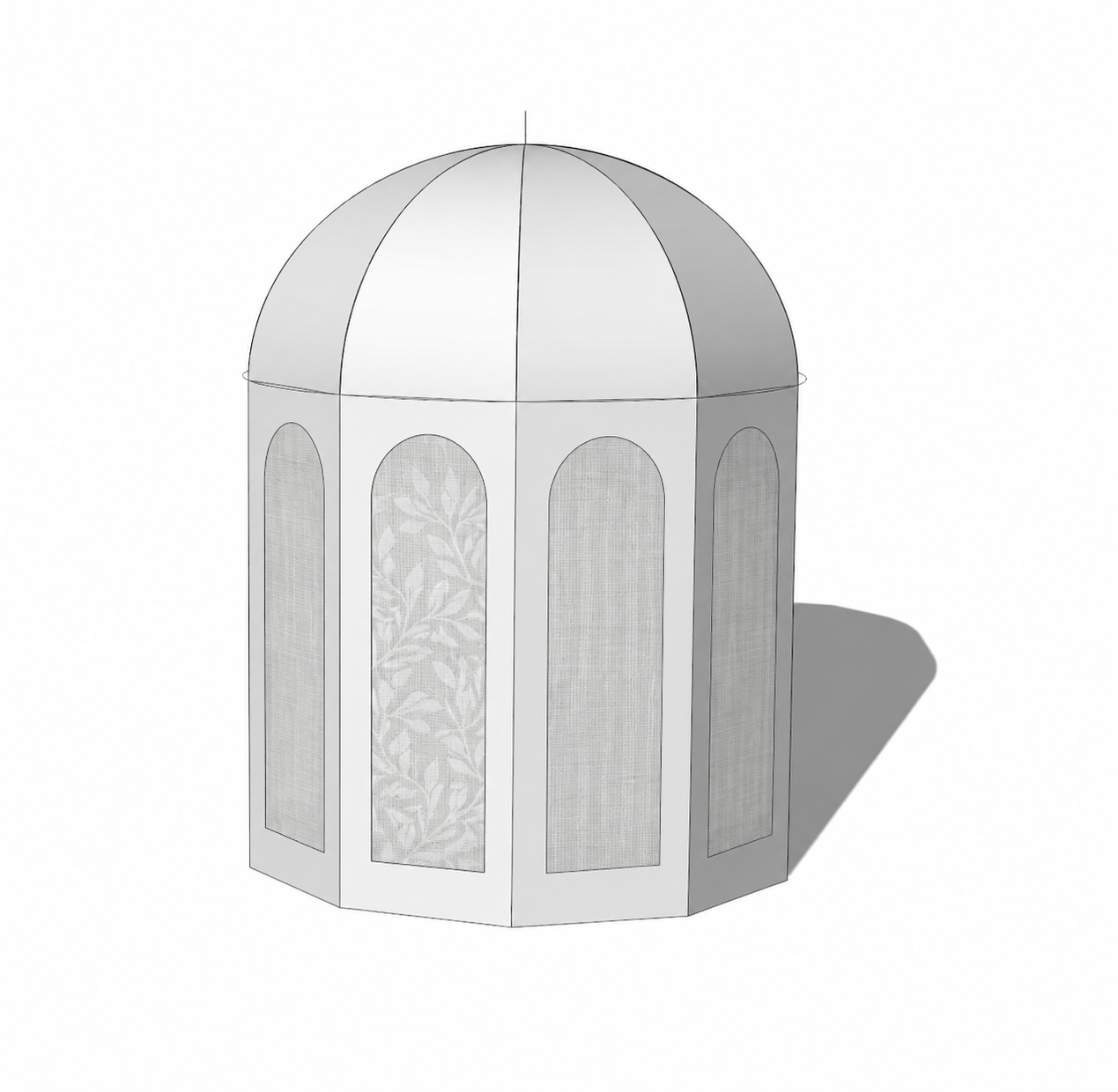
The Great Bed of Ware 2.0 brings an intimate form — the bed — into the scale of a shared interior. A mobile, ten-sided framework supports woven walls, a soft modular floor and an indigo ceiling filled with stars. The shelter is being made to welcome people, conversation and collective work.
The walls hold keys, olive branches and fields awaiting embroidery. Beneath the star-filled ceiling, participants’ recorded dreams will become another material of the installation. The project asks how textile can give form to care, belonging and the possibility of imagining a future.
FROM THE V&A RESEARCH
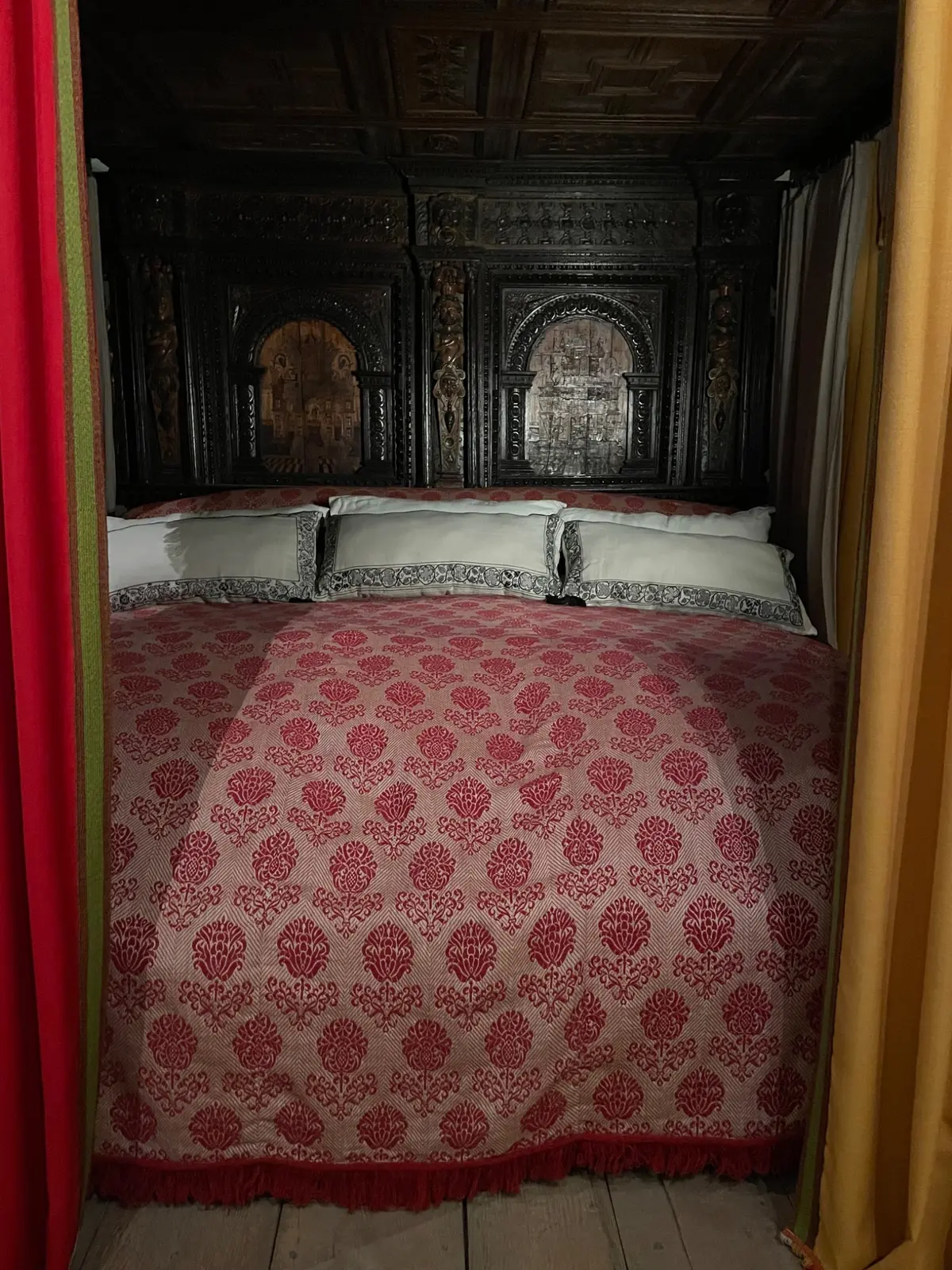
At the V&A, the Great Bed of Ware became legible to me as an inhabitable interior. Timber, curtains, cords and linen together produced a space within a space. This changed the project: the bed’s capacity to gather and shelter people became more important than reproducing its historic shape.
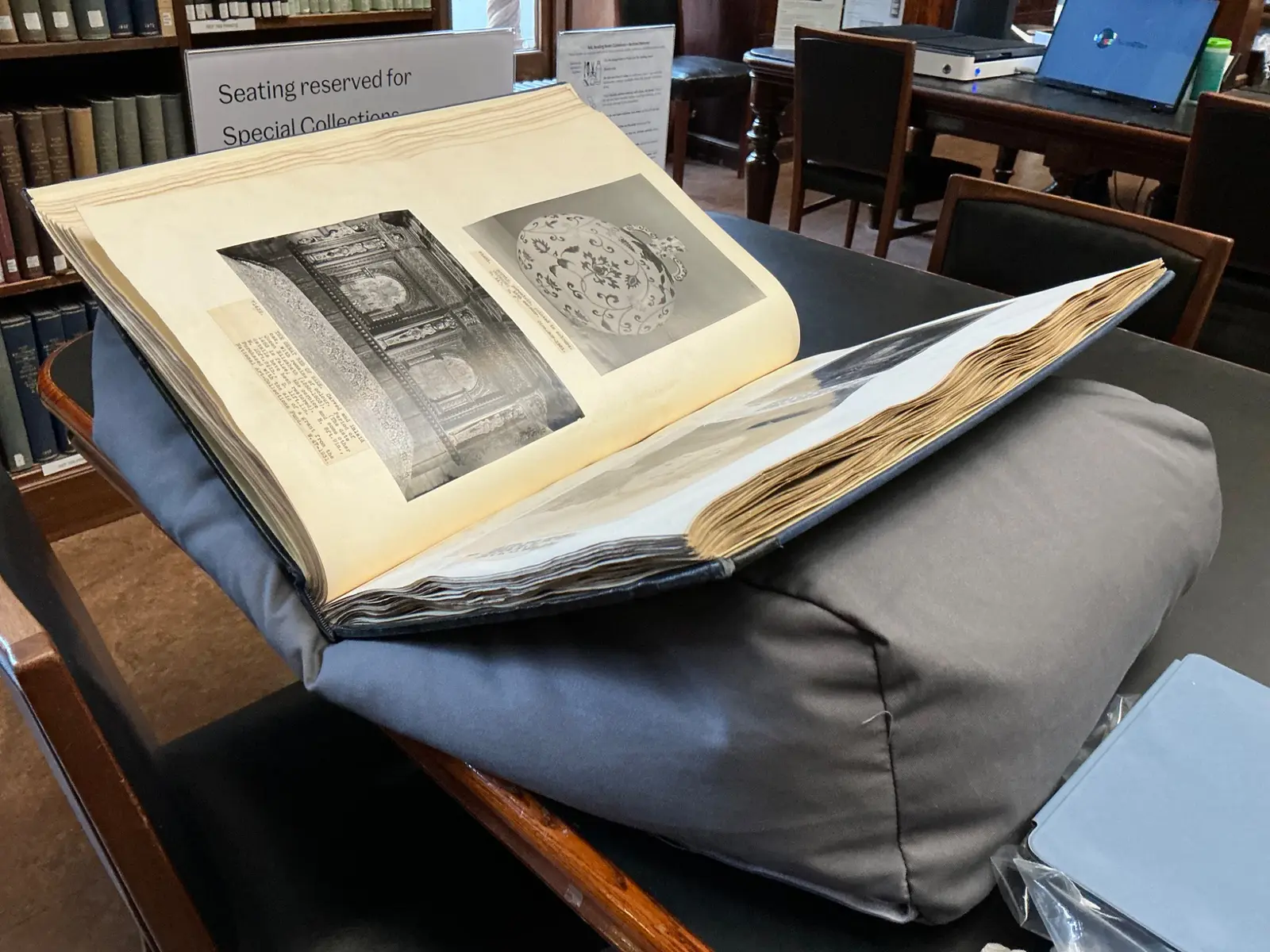
The original textile dressing has not survived. Its absence, and the museum’s reconstruction, opened a space for a contemporary response. The acquisition archive also revealed how an object becomes public through decisions, resources and collective attention. Bed Shelter carries these questions into a structure to be made and inhabited together.
ARTISTIC METHOD
Bed Shelter explores whether a textile installation can become a spatial and multilingual counter-archive. In contrast to administrative and media representations that reduce migration to legal status, numbers and images of crisis, the project seeks to preserve other forms of knowledge: dreams, gestures, voices, patterns, touch and imagined futures.
Its counter-archival character depends on the participants’ agency — on their decisions about what may be recorded, translated, embroidered, heard or withheld. The work does not claim to speak for them; it asks how a shared textile structure might hold partial and distinct traces without turning them into a single authoritative account.
02 / ANATOMY
Explore the planned layers of the installation.
01 / STRUCTURE
Ten equal sides create a room without a privileged front. The form gathers people around a shared centre while keeping multiple ways in and out.
03 / MATERIAL LANGUAGE
Pale wall textiles hold olive leaves, keys and fields awaiting embroidery. Light passing through their open areas changes the sense of enclosure: the shelter offers intimacy while remaining connected to its surroundings.
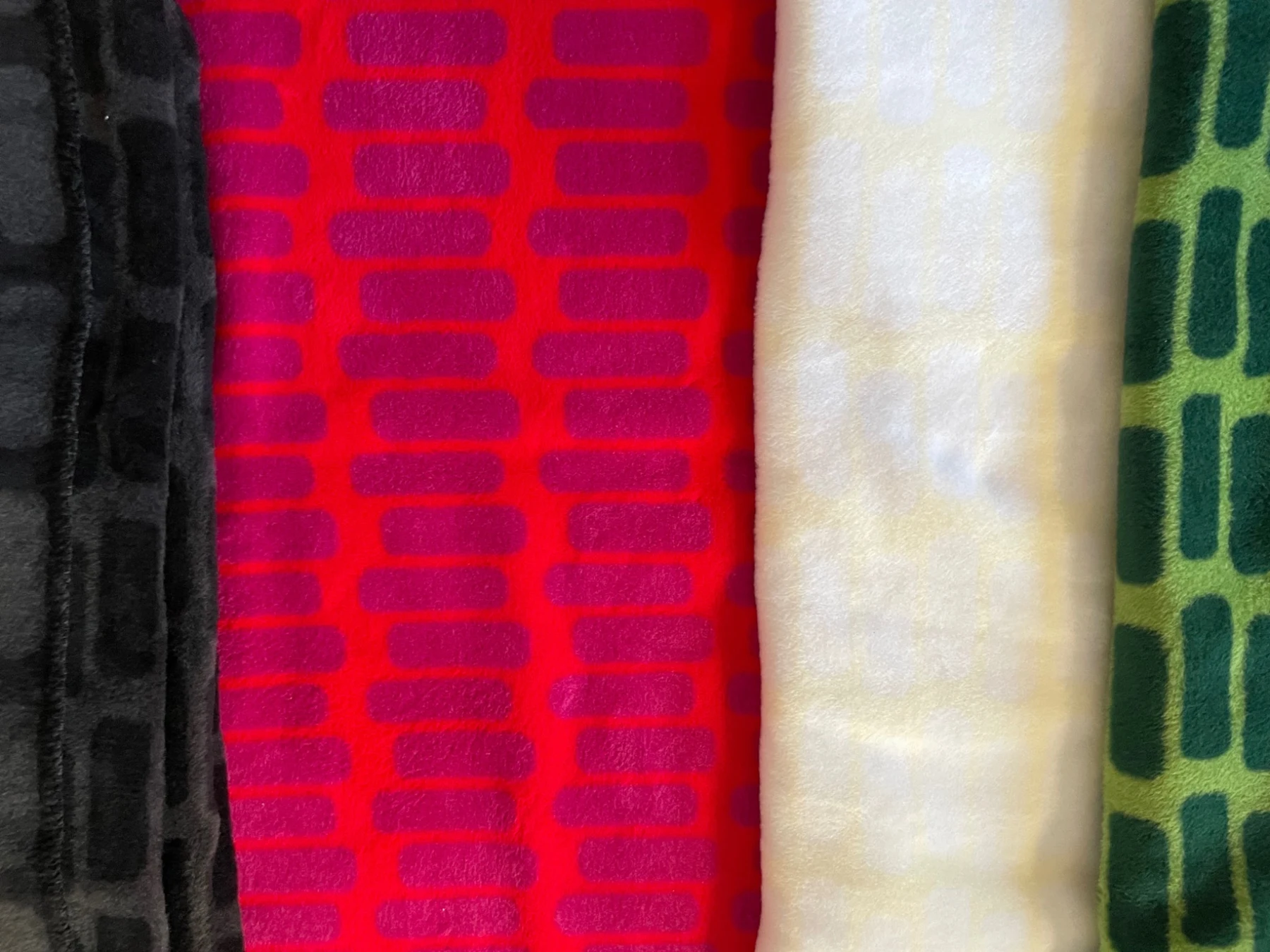
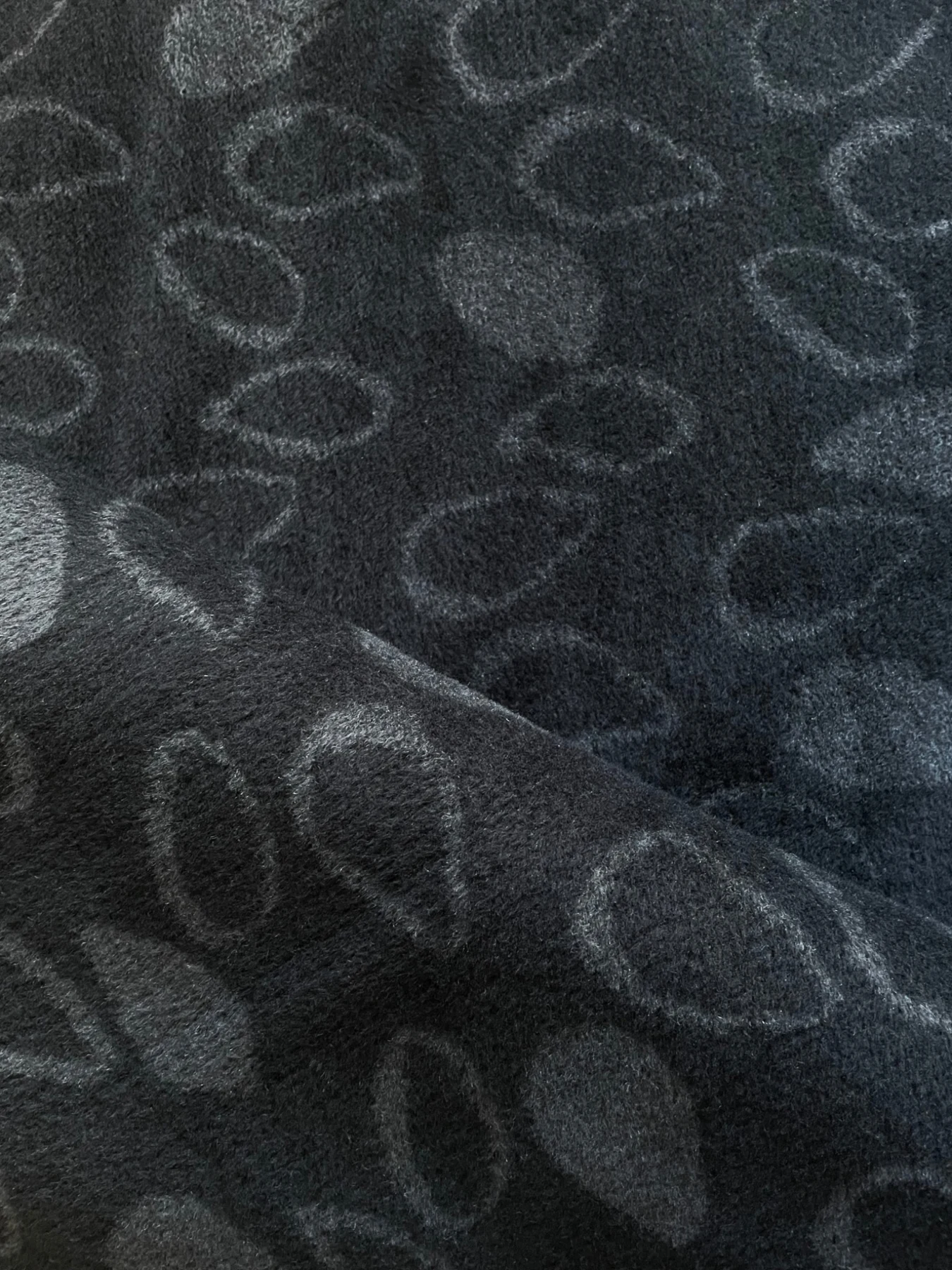
Brushed Jacquard fabrics in green, ivory, red-pink and black will cover the modular floor futons. Their soft surfaces invite sitting and lying down. The photographs show the fabrics before cutting and sewing.
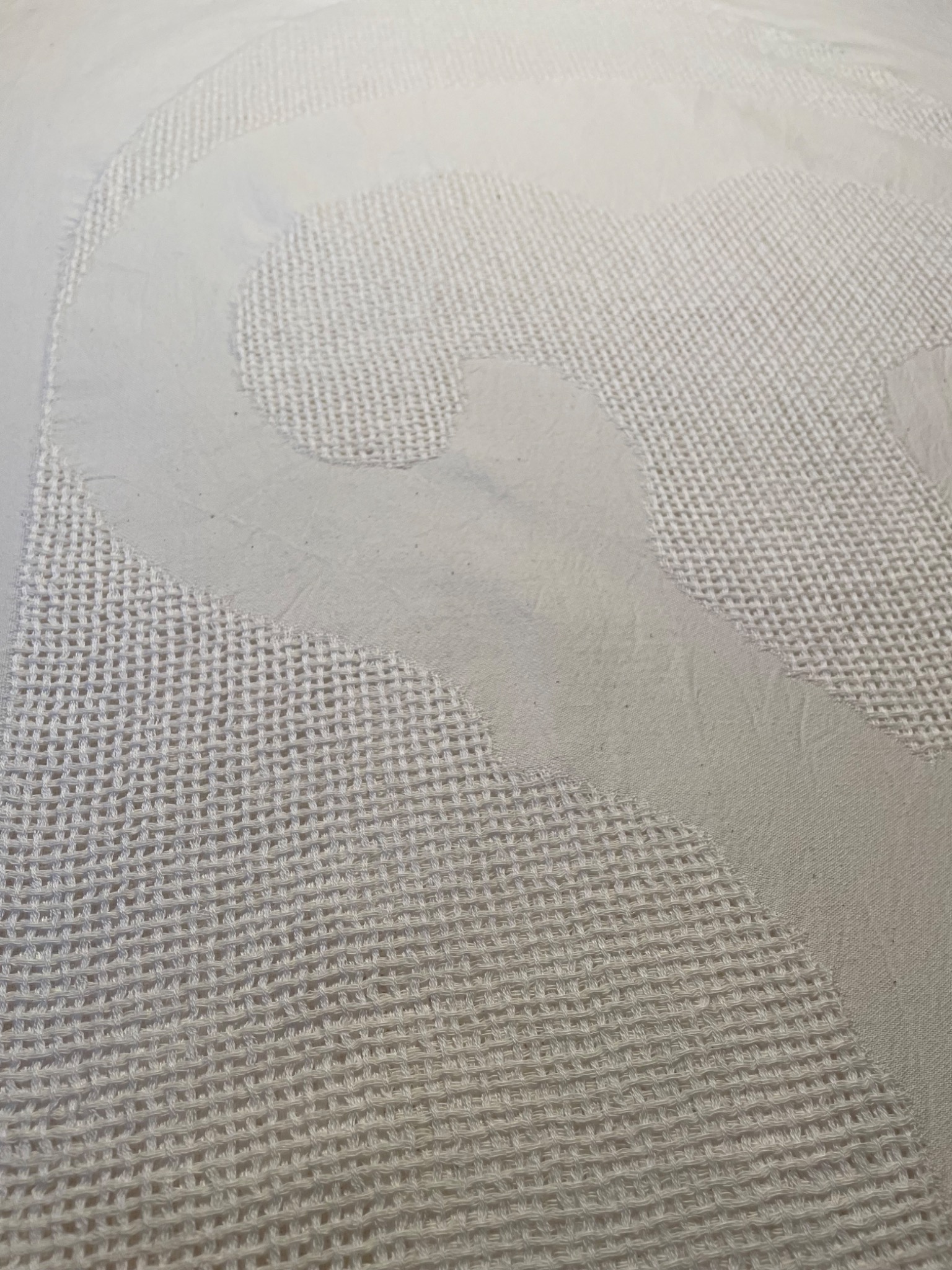
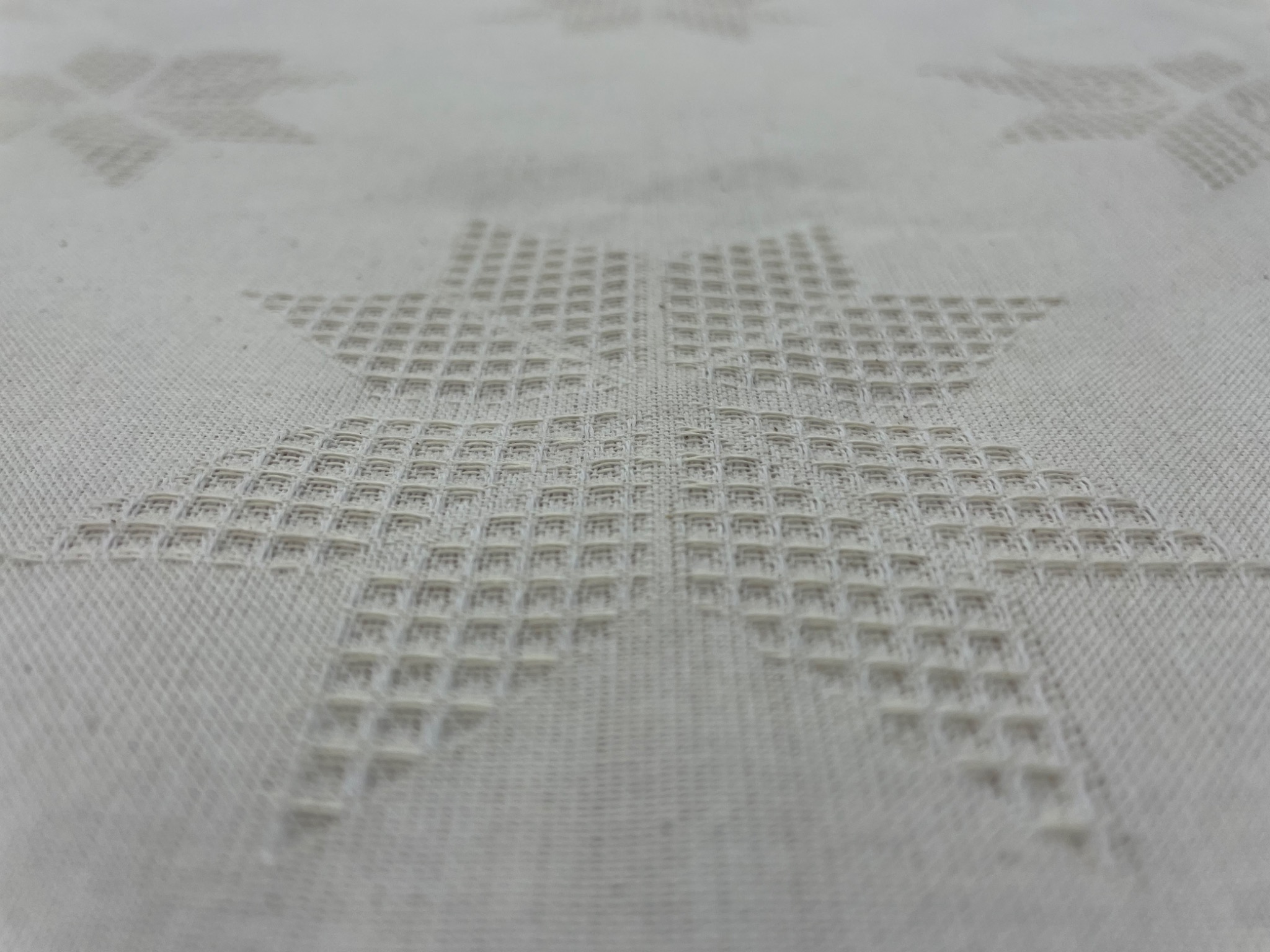
The key evokes home and the possibility of return; the seed suggests continuity and growth. Stars form an imagined sky above the gathering space. These motifs connect the installation’s walls, floor and ceiling.
04 / PROCESS
Material tests, weaving, washing, cutting and assembly are part of the same enquiry. The wall textiles are now woven; a connector prototype has been printed and the wooden crossbars have arrived. Collective embroidery will bring further decisions and gestures into the work.
NOVEMBER 2026 · MATERIAL IN PROGRESS
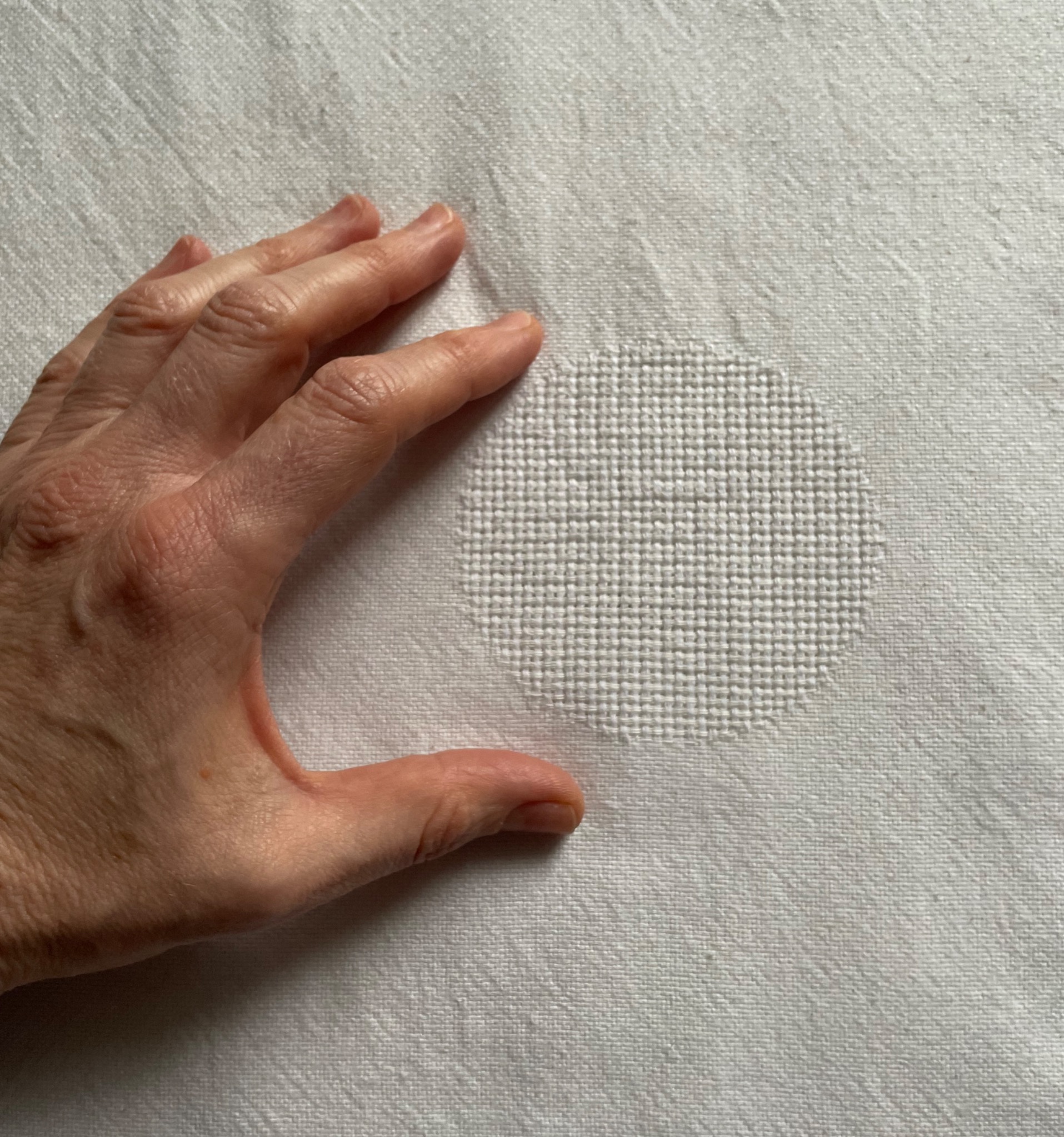
The pale Jacquard panels have been woven. After washing, their relief and open structures become tangible: light passes through some areas while denser fields hold the surface. Circular canvases await the hands of workshop participants. These details offer a first encounter with the material as the shelter takes shape.
Historical form, shelter, commons and textile signs.
Jacquard, double cloth, linen and structural samples.
A modular frame, textile windows and ten floor sections.
Embroidery workshops and shared presence complete the shelter.
05 / WORKSHOP
A SPACE FOR DREAMING
Embroidery and conversation will help make the shelter. The invitation begins with a question about dreams: what might a future hold, and what would we wish for it?
Meetings are being prepared with Galeria Aspekty in Warsaw for a small group of Palestinian participants. An embroidery facilitator, a therapist and an Arabic interpreter will support the process alongside the artist. There will be time to make, listen and simply be present.
Circular open-weave fields are woven into the pale wall textiles. Participants will embroider these canvases, and their work will become part of the installation. Each contribution will retain the trace of an individual hand.
Participants who wish may record their response to “What do you dream of?” in Arabic, English or Polish. These voices are intended to inhabit the space beneath the indigo ceiling: dreams, wishes and possible futures heard above those gathered inside.
06 / PROJECT GENEALOGY
The V&A enquiry, conversations, images and material experiments have shaped the work. The research below follows the decisions they opened up.
Select any photograph to see the full frame.
The study visit and archival research at the V&A in London formed part of the project’s research process.
EVOLUTION OF THE FORM
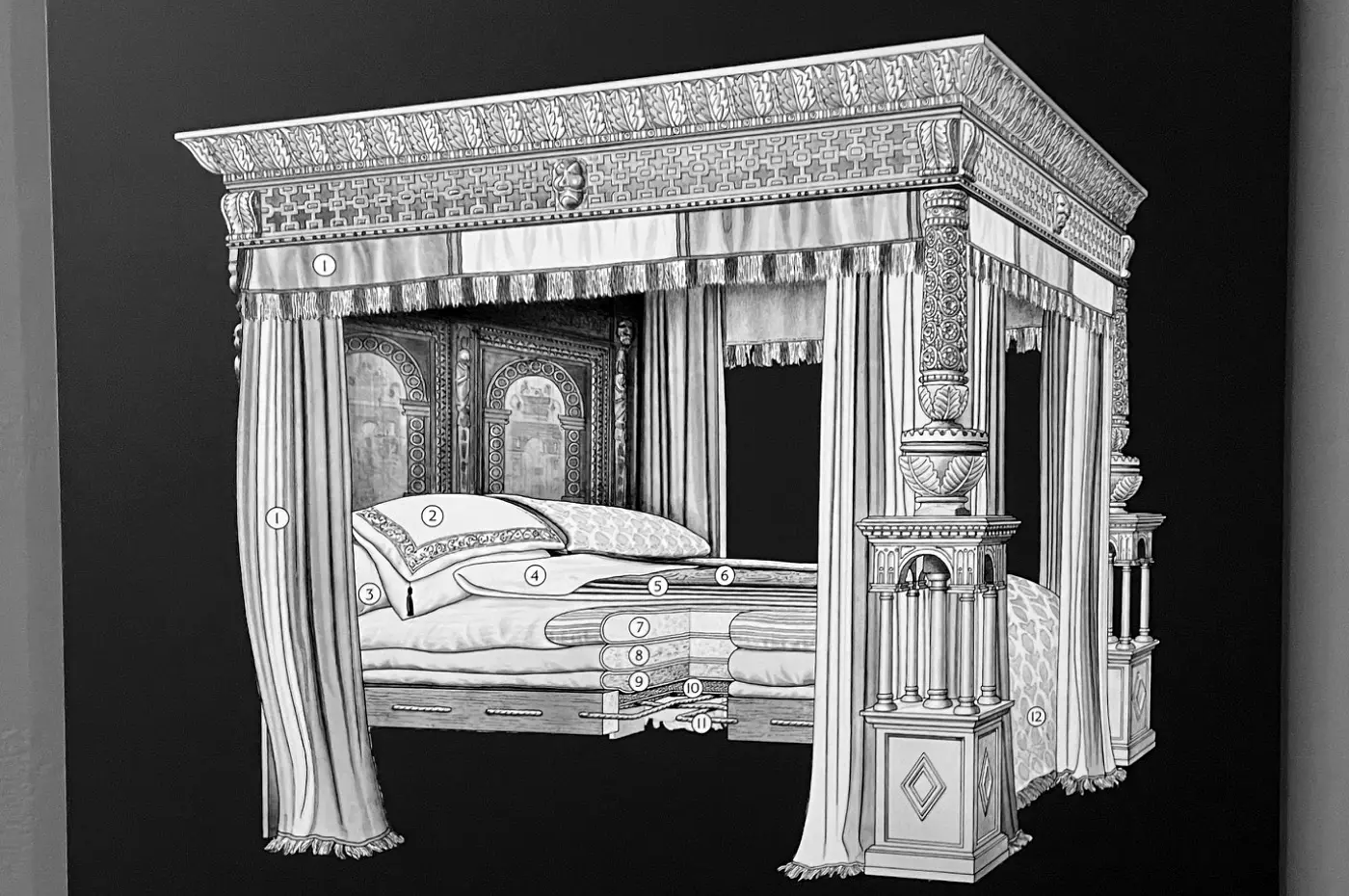
A piece of furniture already operating as a room: layered, enclosed and shared.
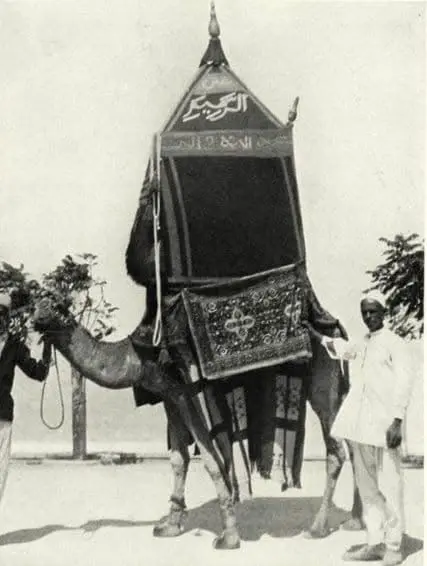
An image shared during a consultation with a Palestinian who cannot return home: shelter lifted from the ground and carried onward.
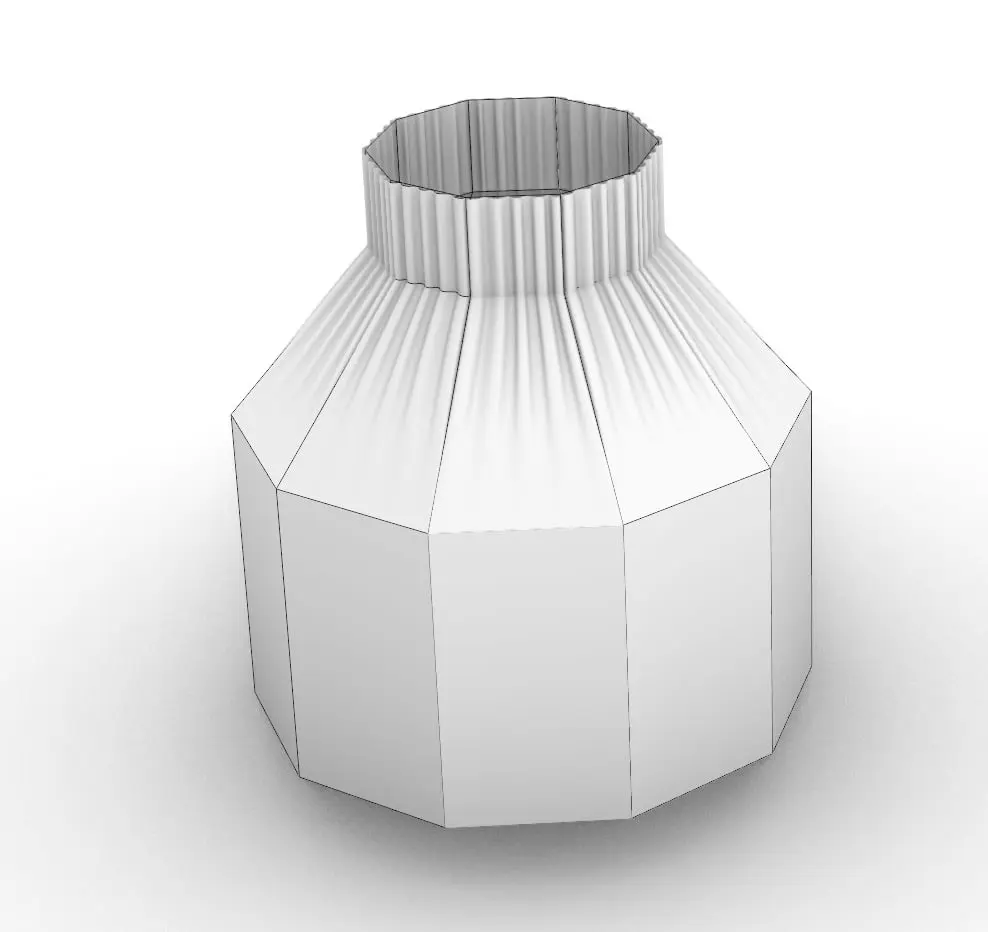
Maciek Jelski’s visualization translates these references into a mobile decagonal framework already understood through its uncoloured textile skin.
THE MEZZANINE OF DREAMS
The carried house first inspired a taller construction with a sleeping level above the workshop space. In the final work this level becomes a marked mezzanine rather than a literal bed. From it come voices recorded in response to a question about plans for the future: Palestinian dreams of a beautiful life still to come. Dream as both a noun and a verb — sleep, a dream, and the act of imagining otherwise.
MATERIAL RESEARCH
The samples test how a textile can become a wall, an opening, a carrier of signs and a field of participation. Openness, relief and the direction of threads are treated as spatial and narrative tools.
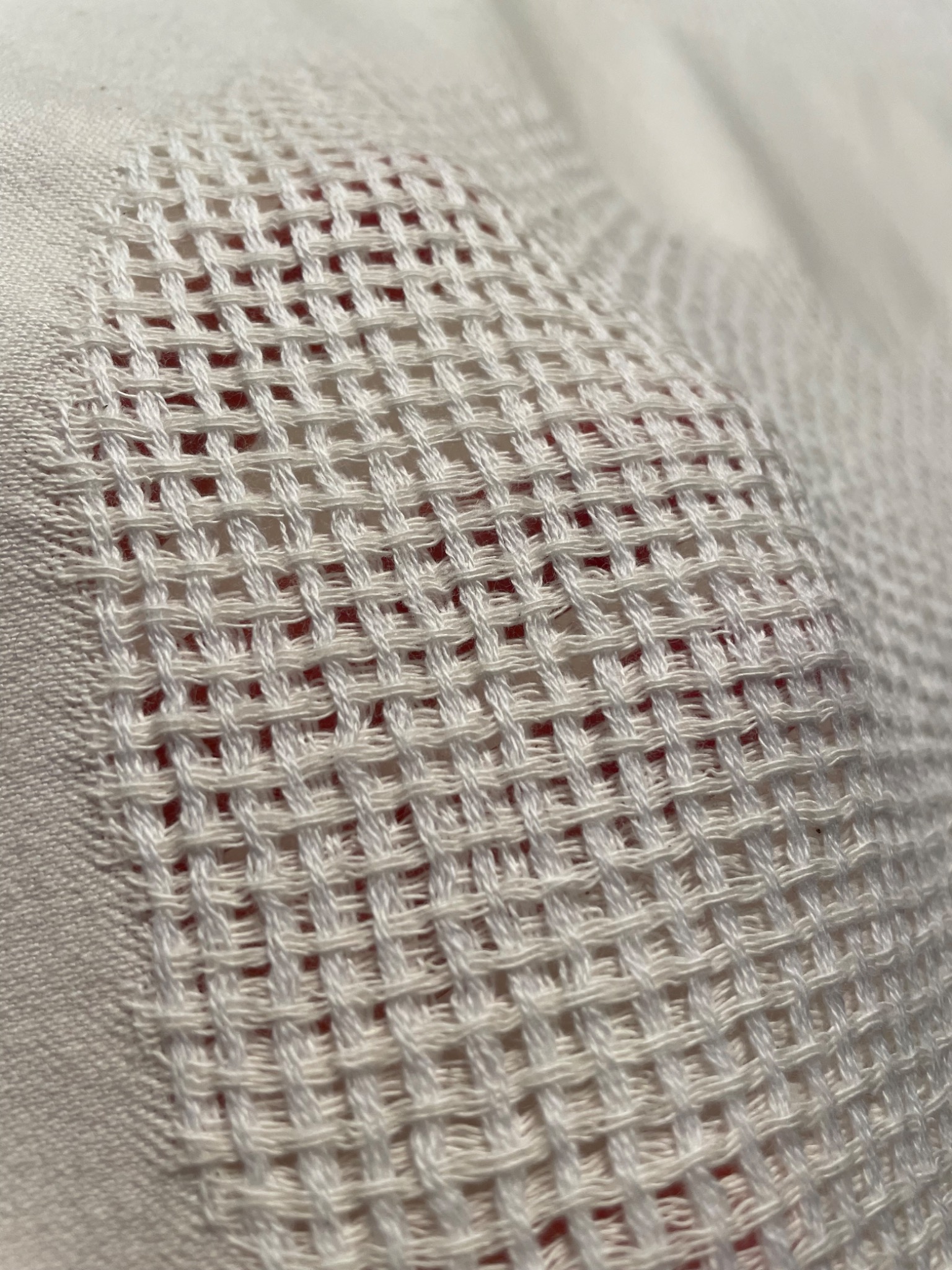
The word gauze is often linked with Gaza, once known in European accounts for fine open textiles, although the etymology is not fully settled. Here the association is held as a question rather than proof: an open weave becomes permeability, fragility and breath.
Damask takes its name from Damascus. Its figured structure suggested a way for meaning to reside in the weave itself, revealed by light and touch rather than applied as an image. The key and olive tree can enter the textile as carried signs of return, rootedness and endurance.
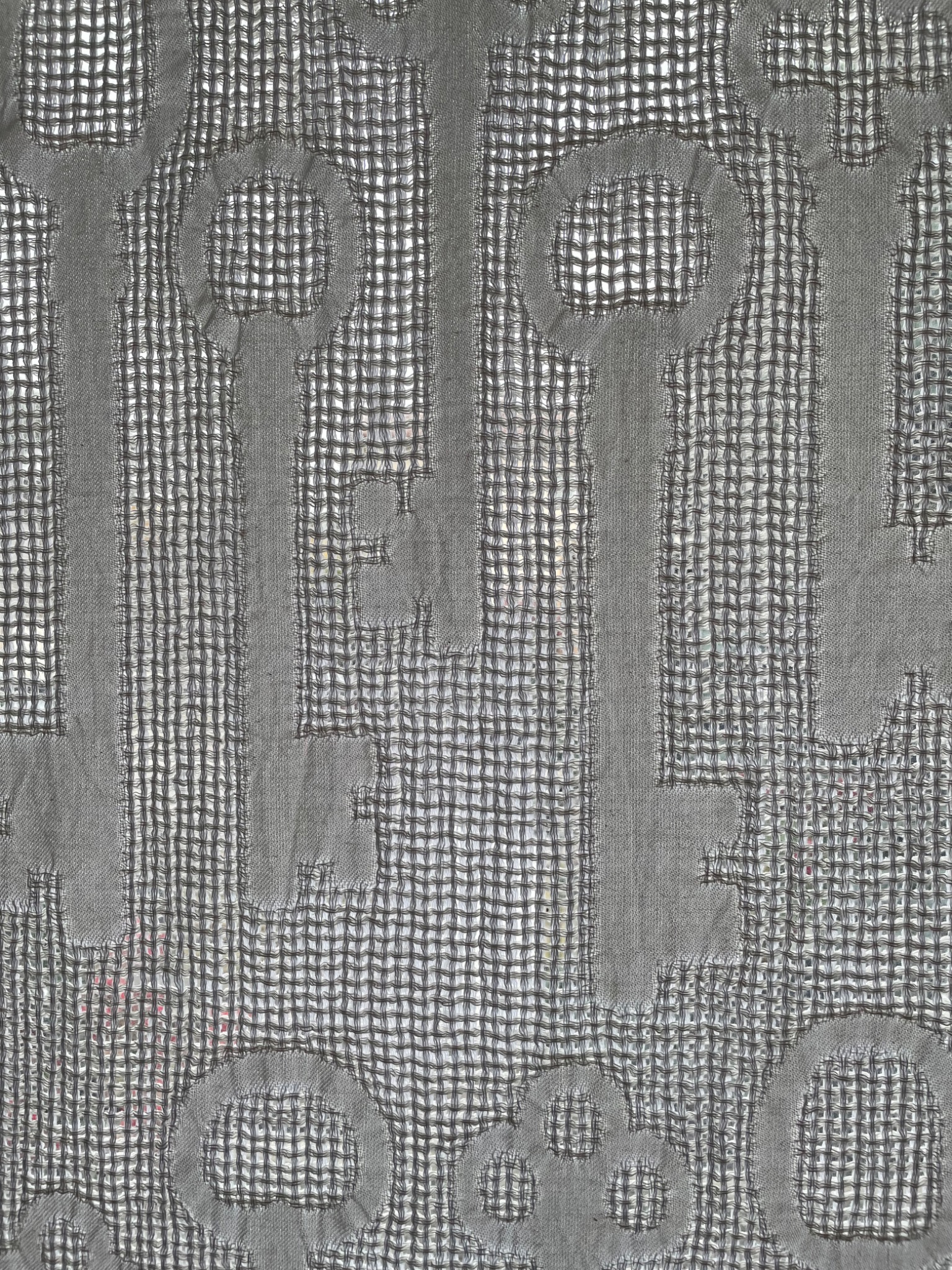
Alternating dense and open fields makes the textile behave like a light, soft architecture. It can suggest a window or boundary without closing the body away from light, air and other people.
The eight-armed motif becomes a play of relief, openness and light. Its translation into woven structure offers a tactile encounter with a sign drawn from Palestinian embroidery.
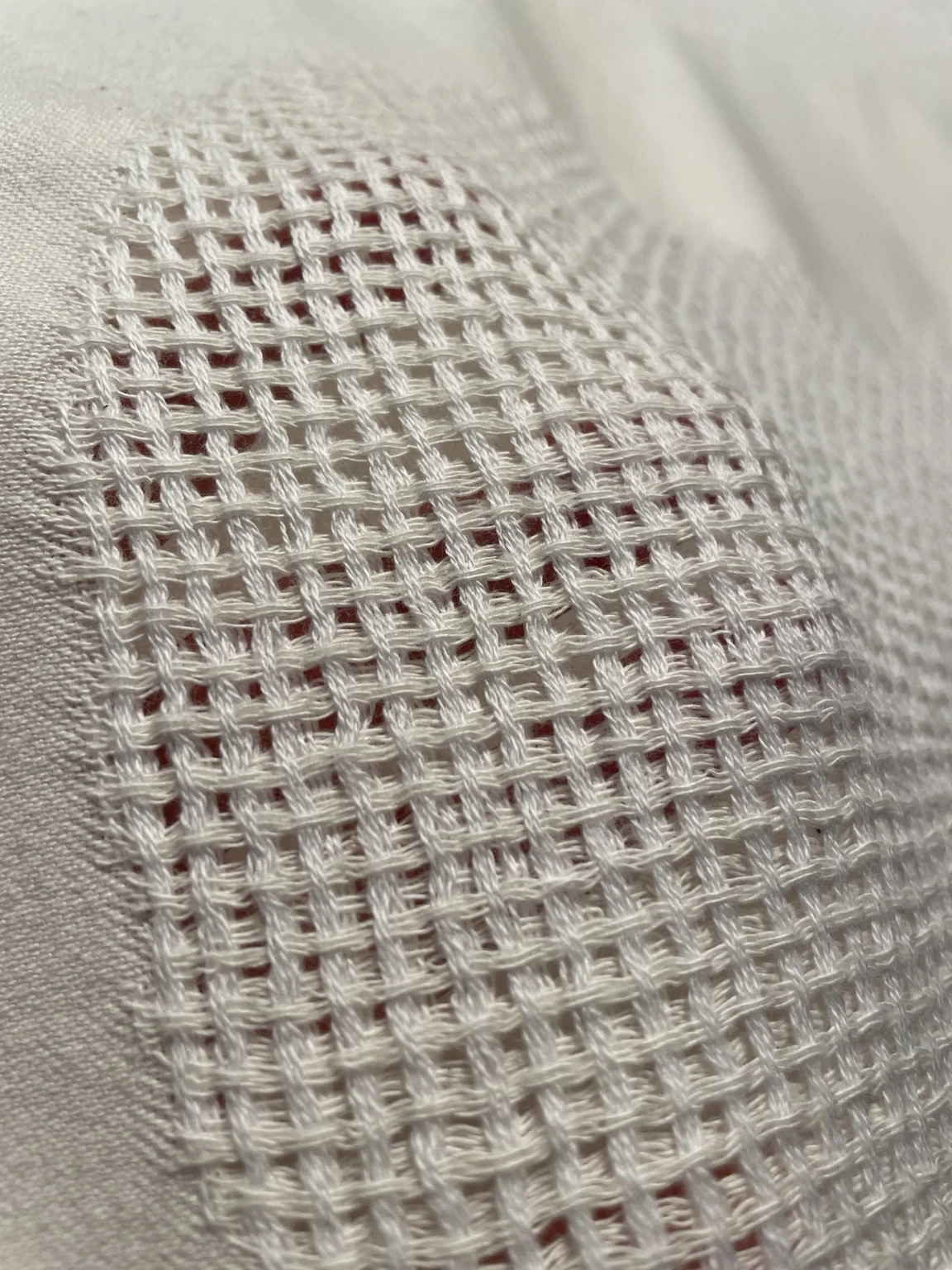
The links between textile names and places are used critically: Damascus is the established source of the word damask; the proposed connection between gauze and Gaza remains debated.
01
FIRST ENCOUNTER
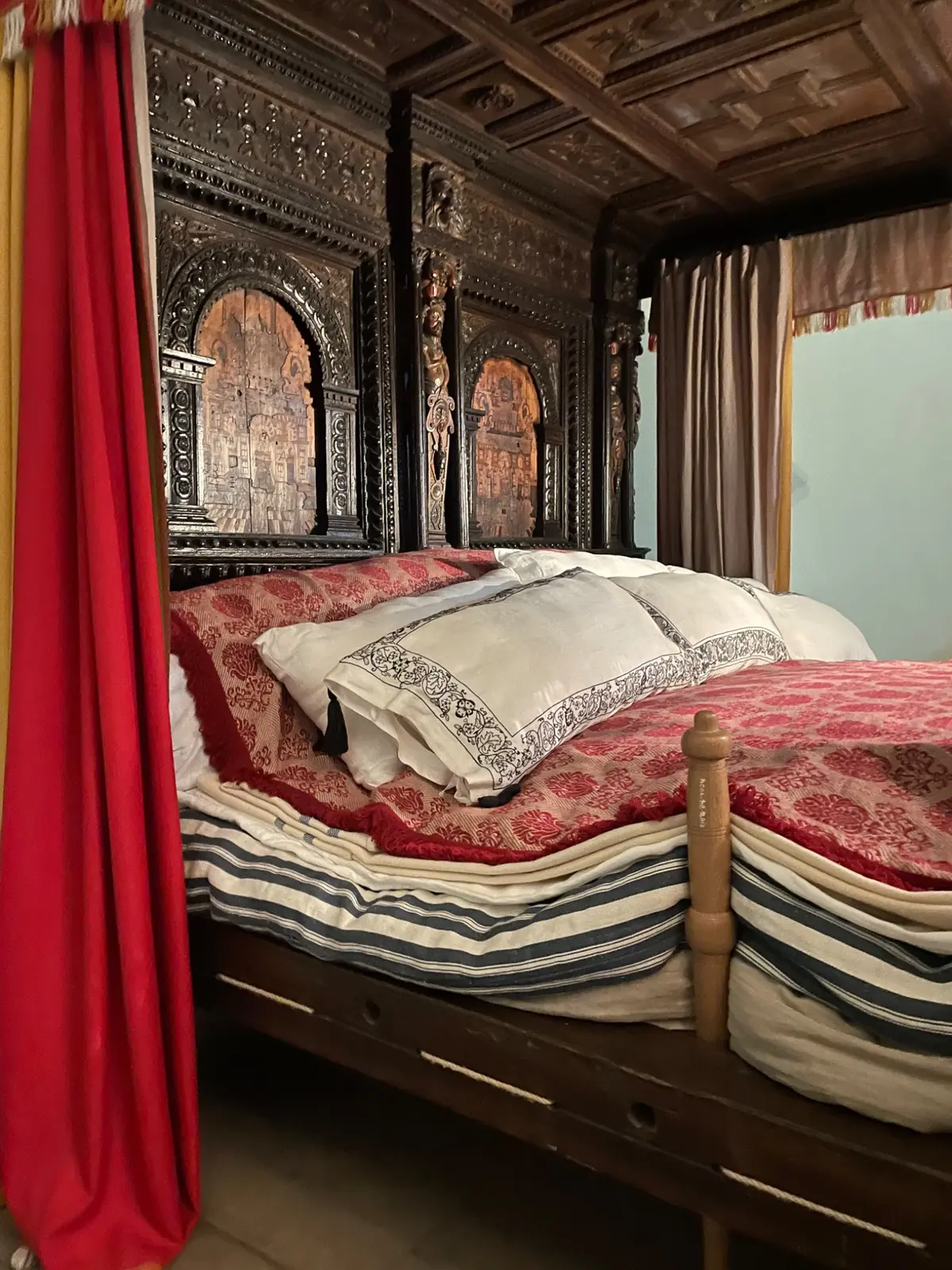
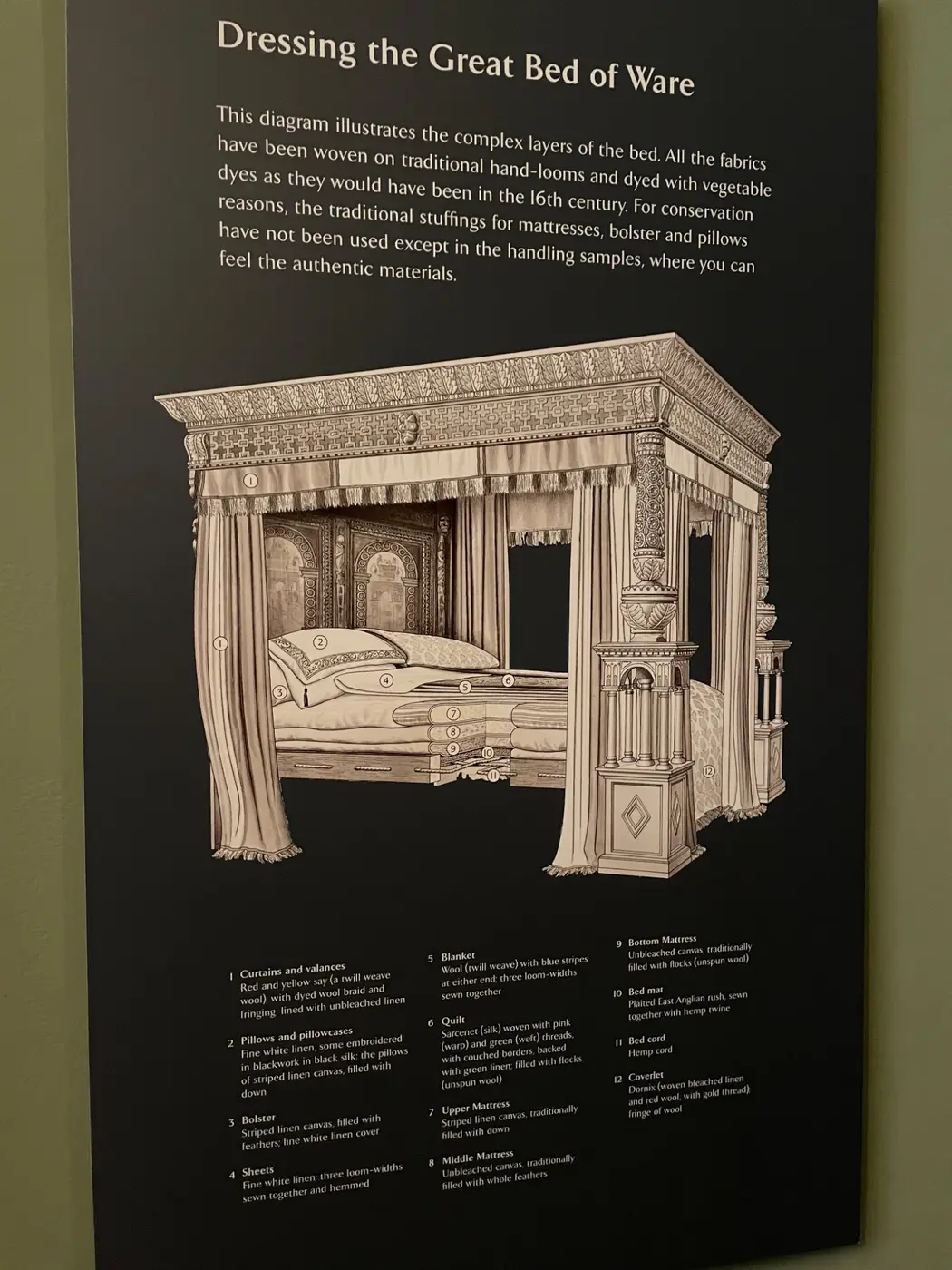
The V&A display Dressing the Great Bed of Ware revealed the bed as a layered room: timber, curtains, cords, linen and bodies forming one spatial system. This encounter became the starting point for enlarging the bed into a shelter.
02
ABSENCE
The original hangings did not survive. The present dressing is a reconstruction based on inventories, surviving textiles and material research. This gap shifted the project away from historical imitation and toward a contemporary, openly provisional textile architecture.
03
THE PUBLIC OBJECT
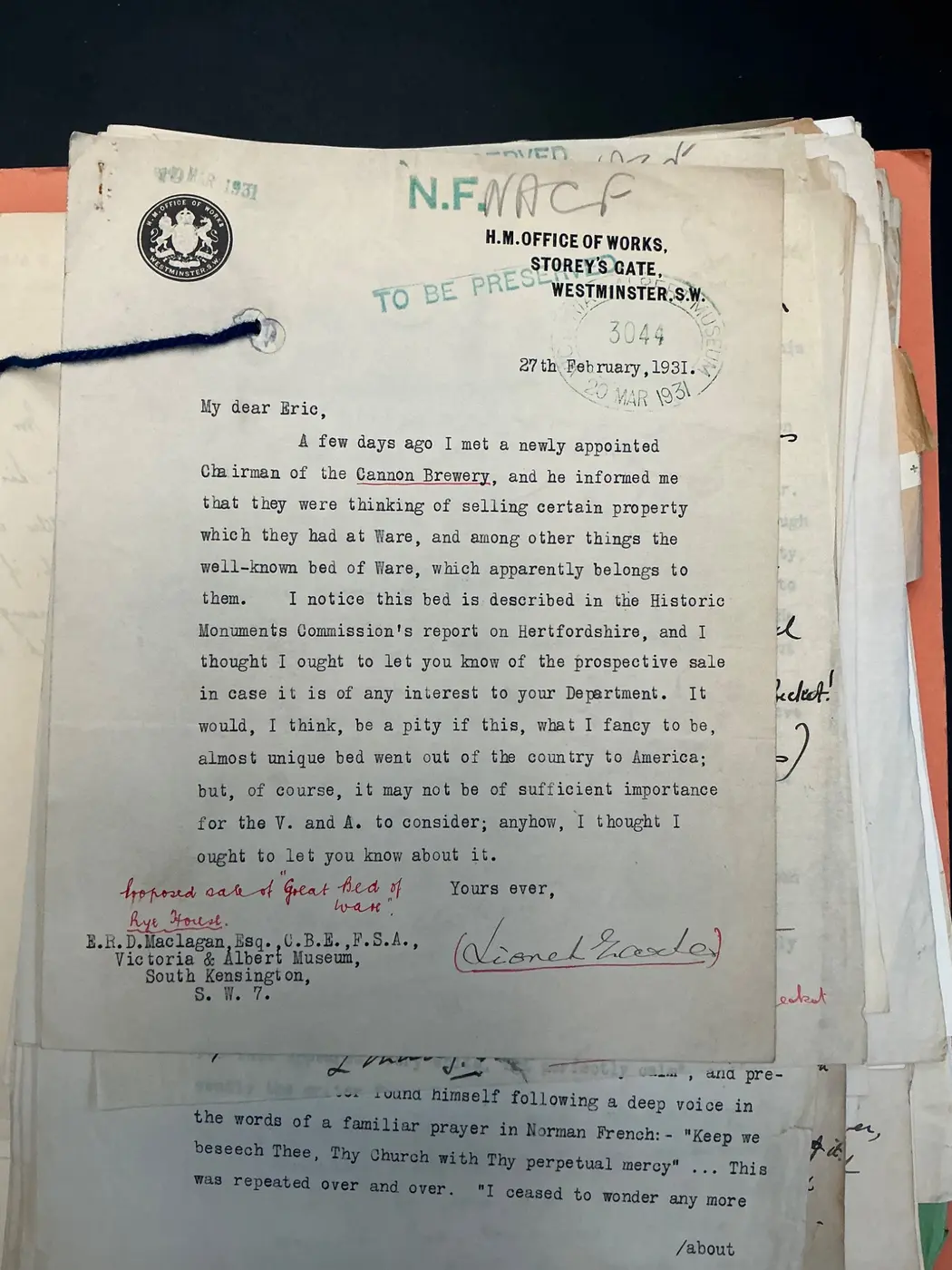
The 1931 correspondence records urgency, negotiation and public support around the bed’s acquisition. The archive made visible that heritage is not neutral: an object becomes “public” through choices, institutions, money and collective attention.
04
PATTERN AS MEMORY
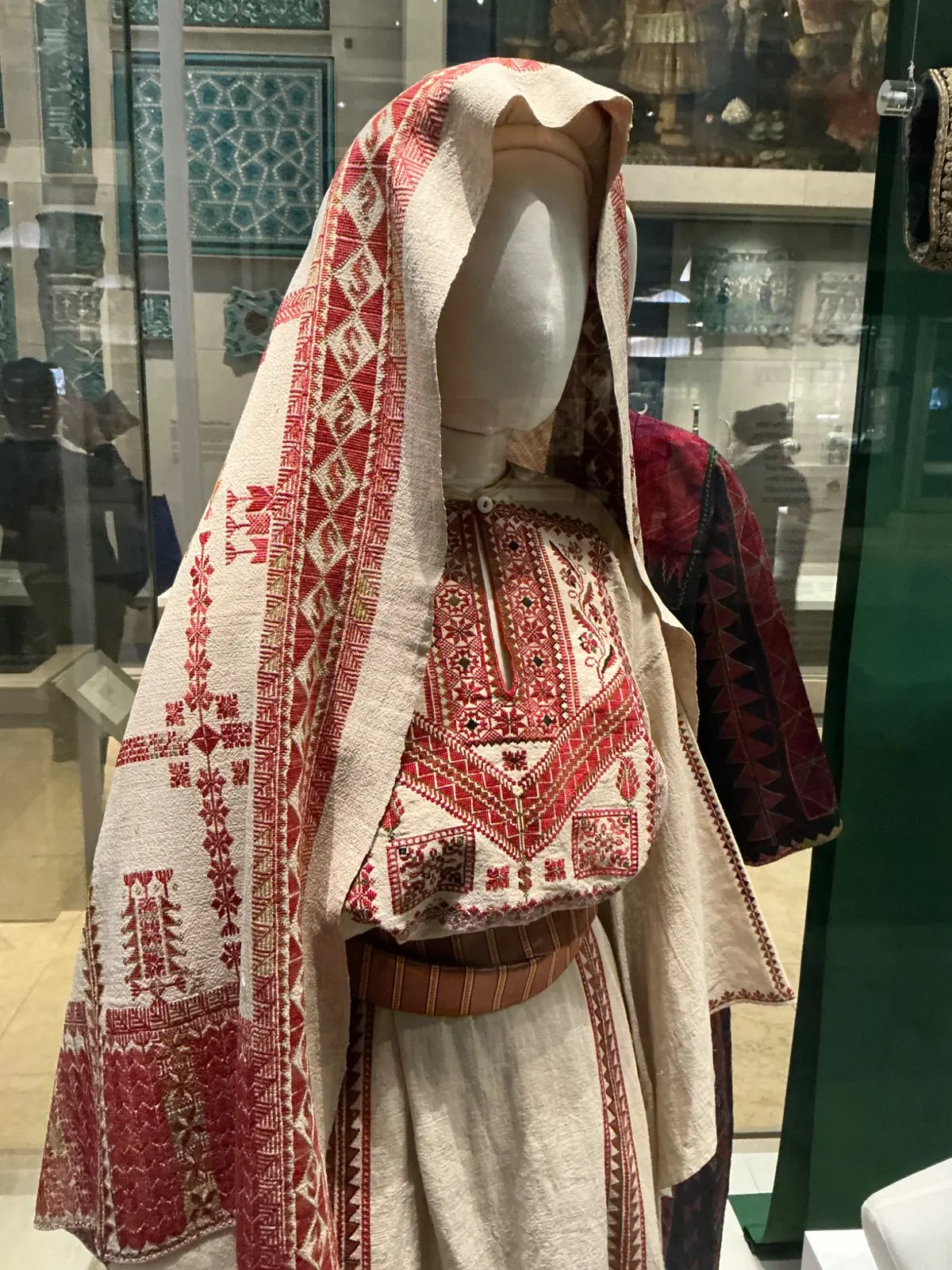
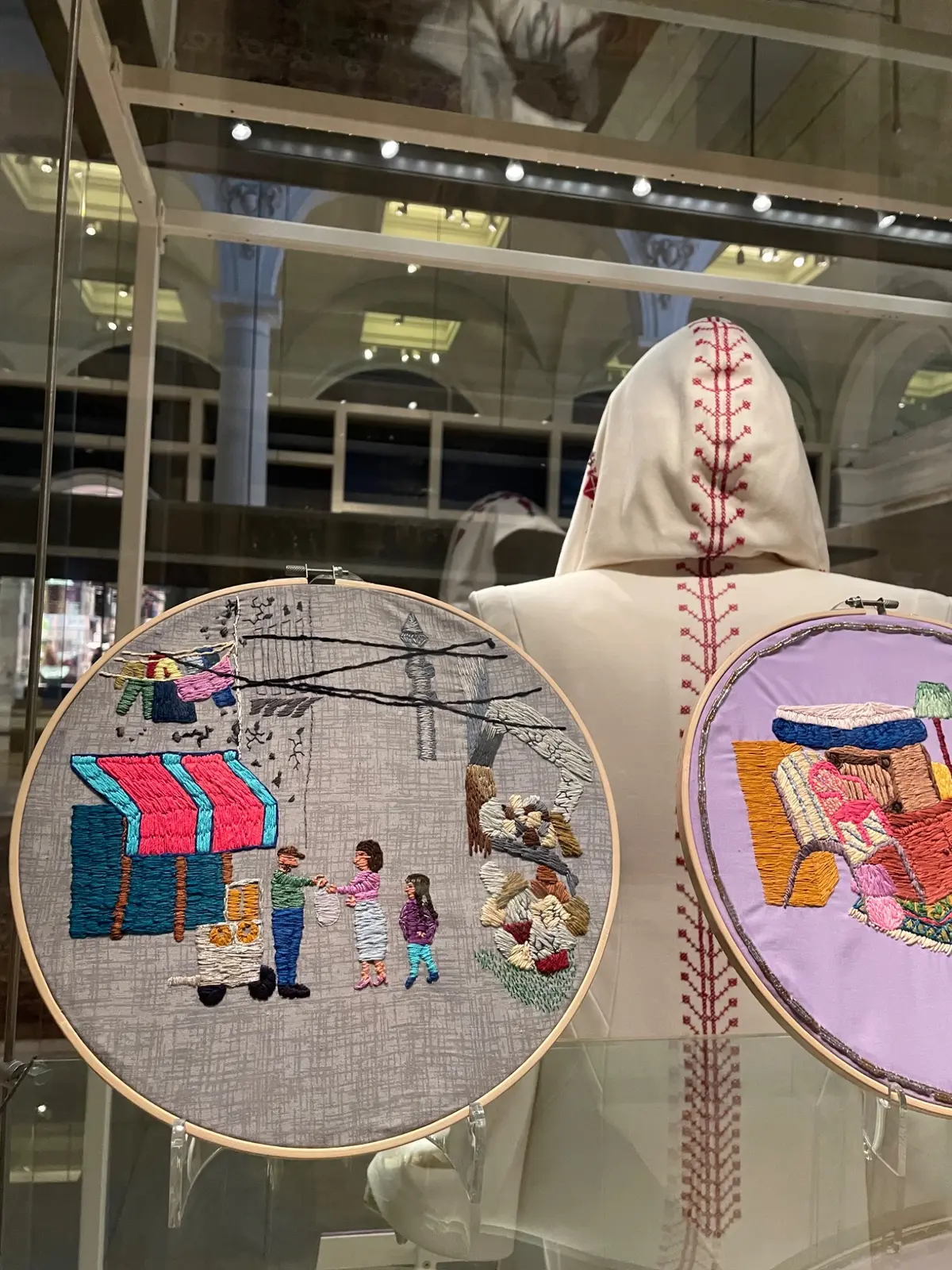
The V&A display placed historical Palestinian embroidery beside contemporary works. Aya Haidar’s Safe Space connected domestic shelter, family memory and war through stitched testimony. The eight-armed star enters this project from that field of meaning — simplified linearly, but not emptied of its origin.
05
THREAD / LINE / STRUCTURE
Tim Ingold’s writing offered a method: a line is not imposed on passive matter, but develops through attention to material forces. In the project this becomes a practical rule — weave, cut, tension and assembly are ways of thinking, not only techniques of execution.
06
READING / RESEARCH CONTEXT
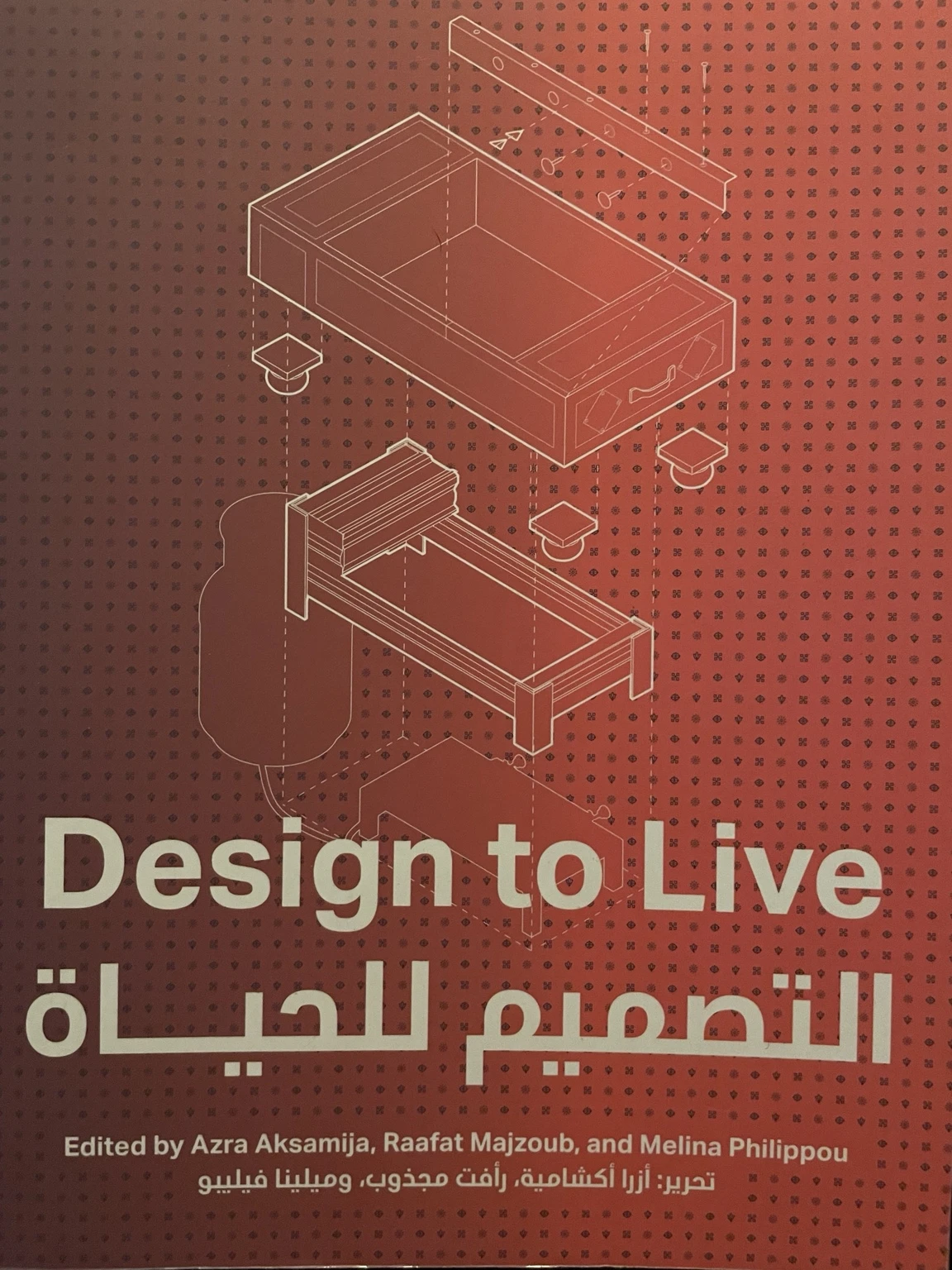
A reading reference in the Bed Shelter research. Edited by Azra Akšamija, Raafat Mazjoub and Melina Philippou.
WORKING CONCLUSIONS
These are not final declarations. They are working propositions that guide the next material, spatial and participatory decisions.
The Great Bed is not quoted as a historical shape. Its layered, inhabitable interior becomes a model for closeness, protection and being together.
Density, openings, folds and light can mark a boundary without producing a hard enclosure. The textile is both surface and spatial structure.
Damask and the debated Gaza–gauze association open questions about how techniques, words and materials travel. They are research paths, not simple proofs.
Removing colour does not remove meaning. Pattern becomes relief, openness and touch; the key and olive tree enter the weave as a symbolic vocabulary.
The circular canvases are deliberately unfinished. Workshop participants complete them, and their embroideries return to the installation as part of its walls.
The absent upper bed becomes an acoustic mezzanine. Recorded Palestinian dreams occupy the structure and make an imagined future physically present.
SELECTED REFERENCES
07 / PROCESS JOURNAL
The journal follows the project as it moves from spatial plan to woven structure and collective activation. It records not only finished results, but also the decisions that redirect the work.
FUNDING / STYPENDIUM

Created as part of a scholarship awarded by the Minister of Culture and National Heritage of the Republic of Poland.
“A textile can be an image. It can also become an architecture of relation.”
Dominika Krogulska-Czekalska · 2026