A participatory textile shelter developed through research, weaving and collective work. An ongoing project supported by a 2026 scholarship from Poland’s Ministry of Culture and National Heritage.
Partycypacyjne tekstylne schronienie rozwijane poprzez badania, tkanie i wspólną pracę. Projekt w toku, realizowany w ramach stypendium Ministra Kultury i Dziedzictwa Narodowego na 2026 rok.
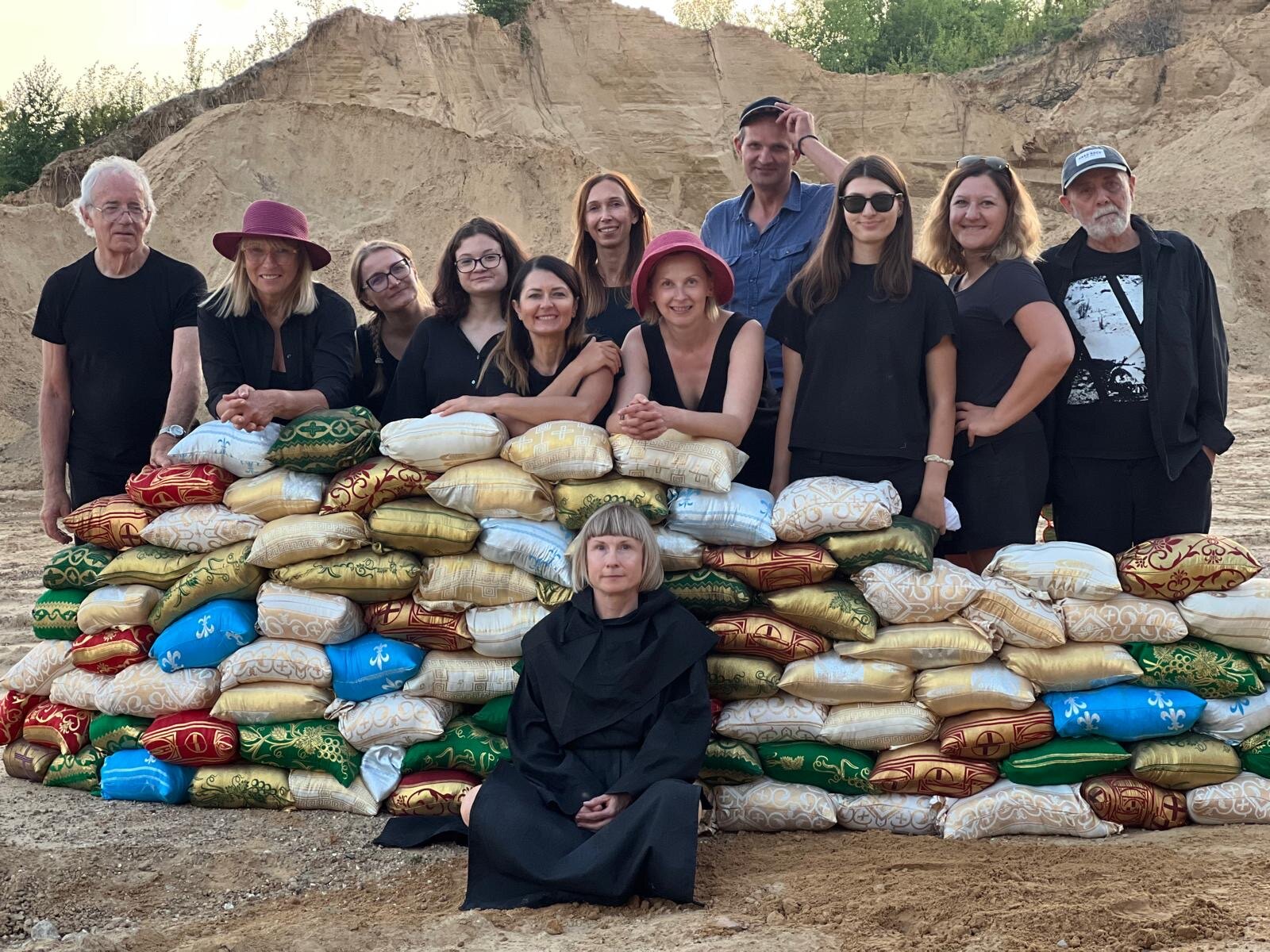
An installation assembled from 122 bags made of rescued Jacquard textiles originally intended for liturgical vestments. Presented at Contextile 2026 in Guimarães, Portugal.
Instalacja ze 122 worków uszytych z uratowanych tkanin żakardowych przeznaczonych pierwotnie na szaty liturgiczne. Prezentowana na Contextile 2026 w Guimarães w Portugalii.
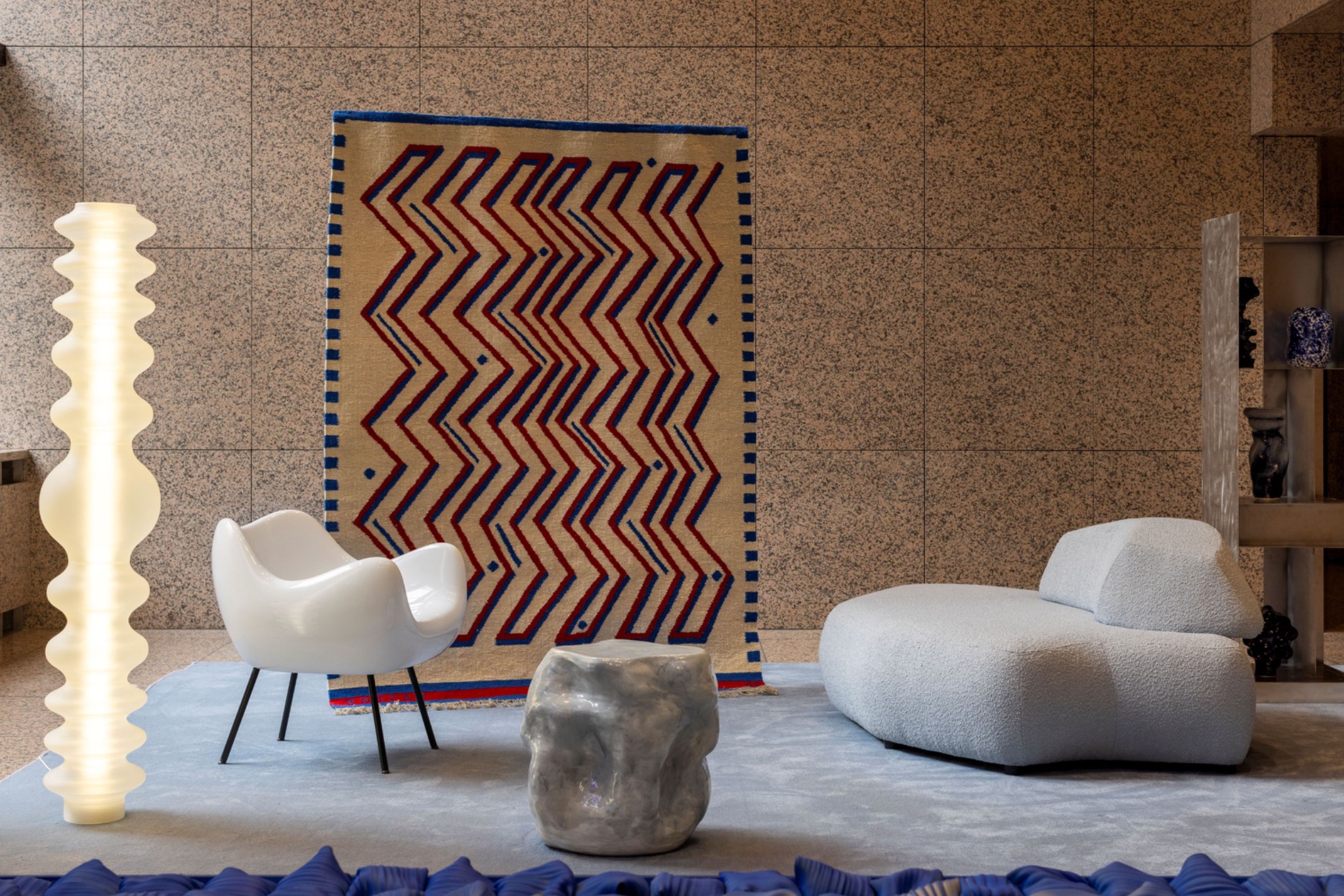
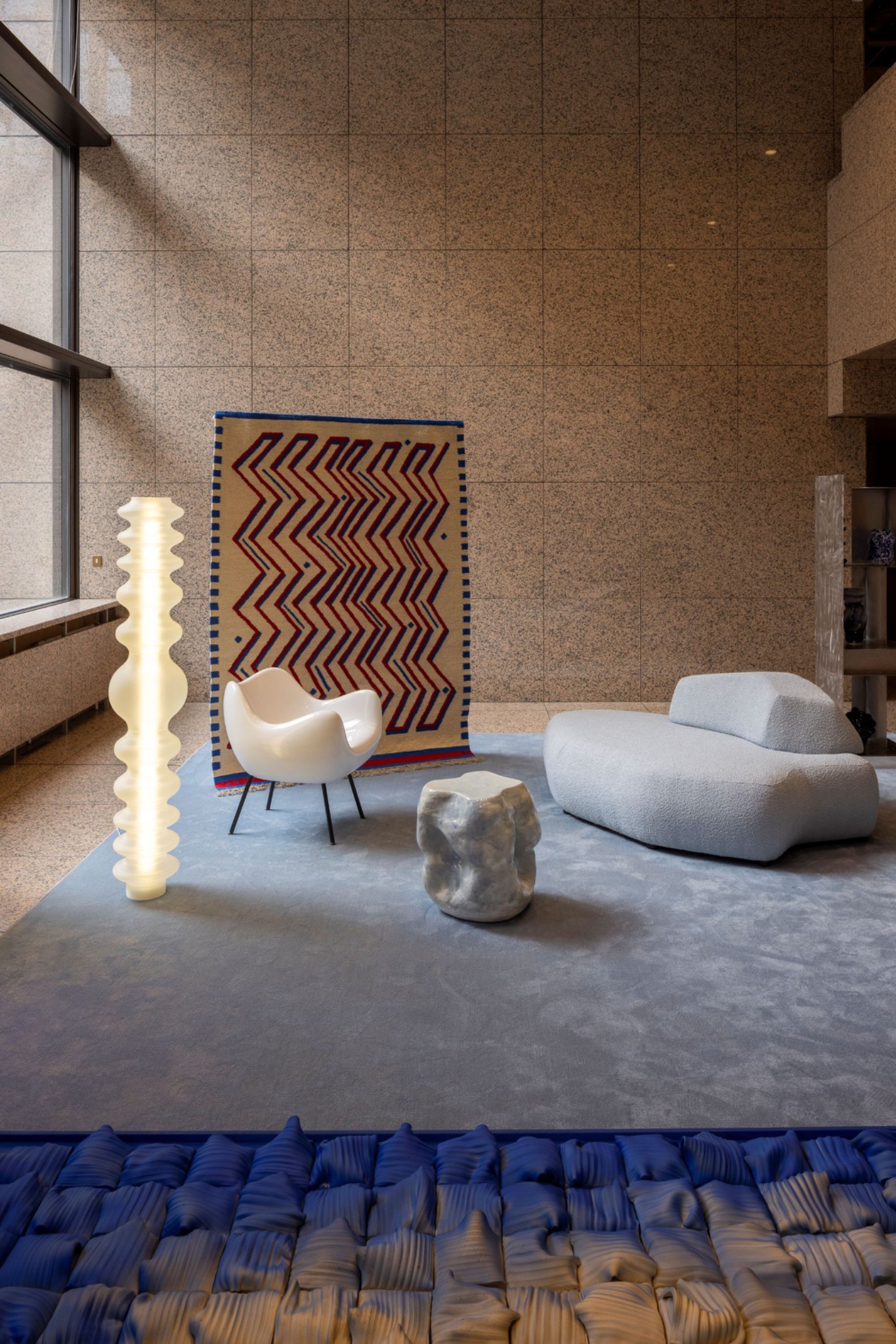
A handwoven kilim designed for Splot as a contemporary response to Wacław Szpakowski’s drawings made with one continuous line. Woven in Bobowa from wool and linen, the design combines the discipline of an uninterrupted path with the irregular intelligence of handwork.
Ręcznie tkany kilim zaprojektowany dla marki Splot jako współczesna odpowiedź na rysunki Wacława Szpakowskiego prowadzone jedną, nieprzerwaną linią. Tkany w Bobowej z wełny i lnu projekt łączy dyscyplinę ciągłej drogi z nieregularną inteligencją pracy ręcznej.
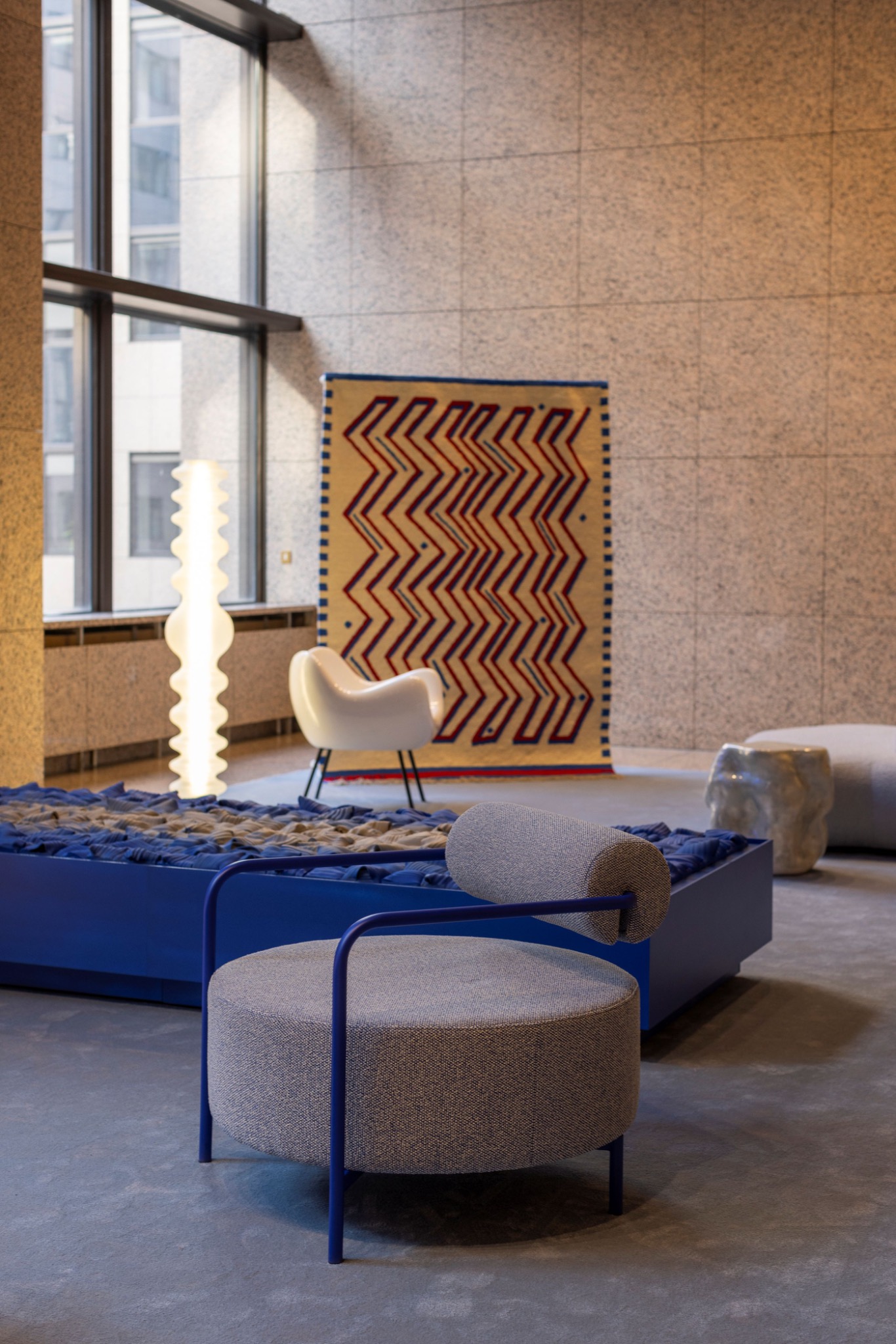
Recognised for its contemporary approach to tradition, Wacław was selected to represent Polish design in Brussels during Poland’s Presidency of the Council of the European Union. It was nominated for EDIDA 2025 by the editors of ELLE Decoration Polska and received the must have distinction at Łódź Design Festival 2025.
Kilim Wacław, zaprojektowany dla marki Splot, zdobył uznanie jako przykład współczesnego myślenia o tradycji. Został wybrany do reprezentacji polskiego designu podczas Prezydencji Polski w Radzie Unii Europejskiej w Brukseli, nominowany do nagrody EDIDA 2025 przez redakcję ELLE Decoration Polska, a na Łódź Design Festival 2025 otrzymał godło must have.
Acquired for the textile collection of the Central Museum of Textiles in Łódź in 2026.
Zakupiony do kolekcji tkaniny Centralnego Muzeum Włókiennictwa w Łodzi w 2026 roku.
On 8 April 2026, Splot announced that Wacław had joined the museum’s collection.
8 kwietnia 2026 roku Splot ogłosił włączenie Wacława do kolekcji muzeum.
Wacław for Splot · Regeneration — Polish Design · Justus Lipsius building, Brussels · Photo: Marek Swoboda.View gallery · 2 more photographs
Wacław for Splot · Regeneration — Polish Design · Justus Lipsius building, Brussels · Photo: Marek Swoboda.Wacław for Splot · Regeneration — Polish Design · Justus Lipsius building, Brussels · Photo: Marek Swoboda.
2024–2025
Colors That Refuse to Hide
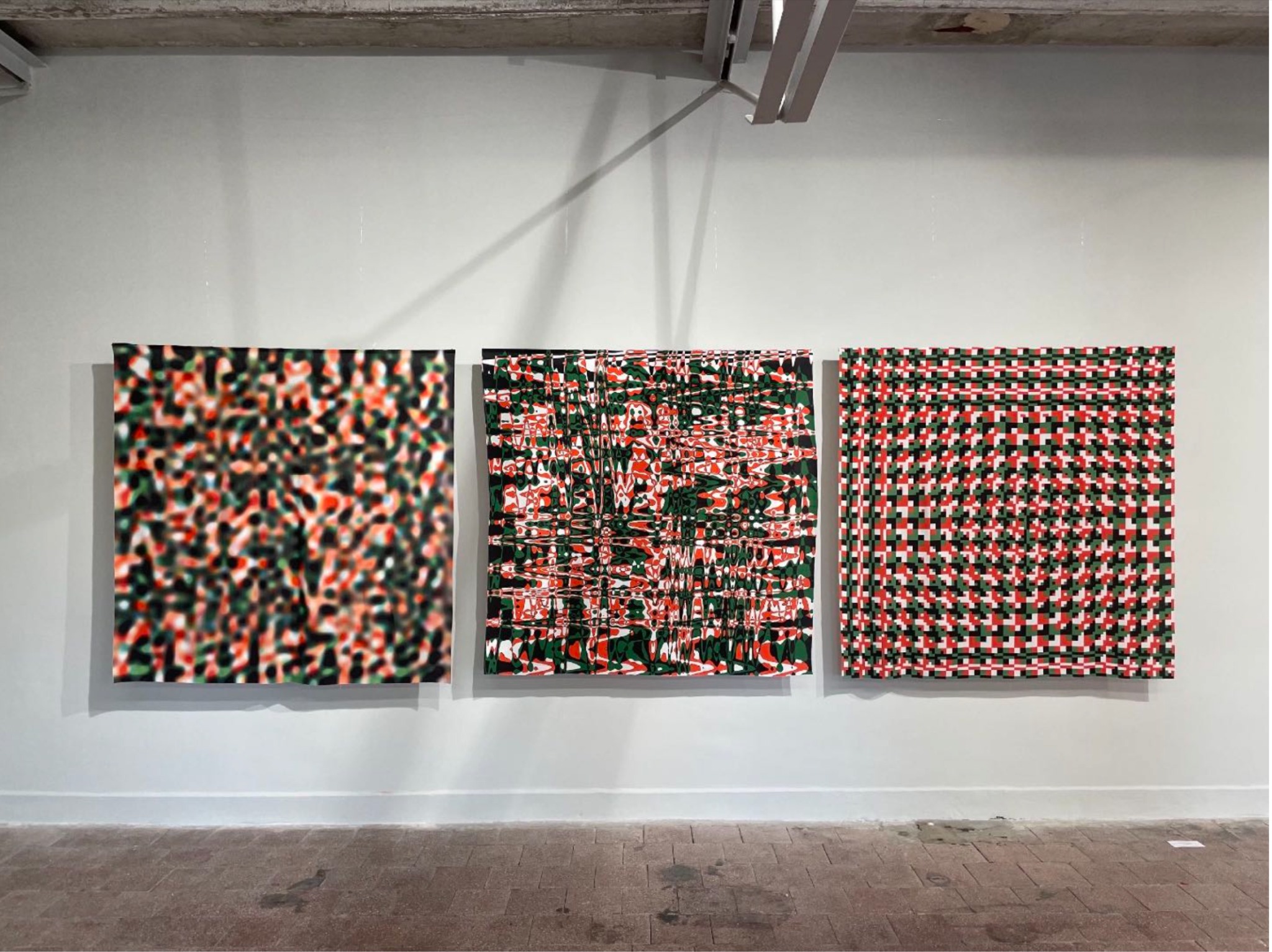
Colors That Refuse to Hide — The Personal is Political is a triptych of three printed silk textiles. Through the use of a refined medium, they evoke associations with luxurious scarves. However, the pattern serves more than a decorative function: it is a visual paraphrase in which the colours of the Palestinian flag play the central role, rooted in my everyday experience as someone committed to supporting education about Palestine.
The motif undergoes transformation: in the first textile, the geometric order is subtly disrupted; in the second, the distortion becomes distinct and multidirectional; in the third, the pattern dissolves and vanishes. Only the colours remain — yet even they lose sharpness and blur.
This is my interpretation of the process of erasing the Indigenous population of Palestine, and an attempt to create an appealing and luxurious functional object that carries an encoded message.
Tryptyk drukowanych tkanin jedwabnych oparty na kolorach palestyńskiej flagi, transformacji wzoru i próbie wymazywania palestyńskiej obecności. Kolor nie jest tu dekoracją, lecz strategią widzialności, oporu i solidarności.
Personal is Political · Van Rij Gallery · Design Without Borders
Colors That Refuse to Hide — The Personal is Political · van Rij Gallery, Ćmielów.
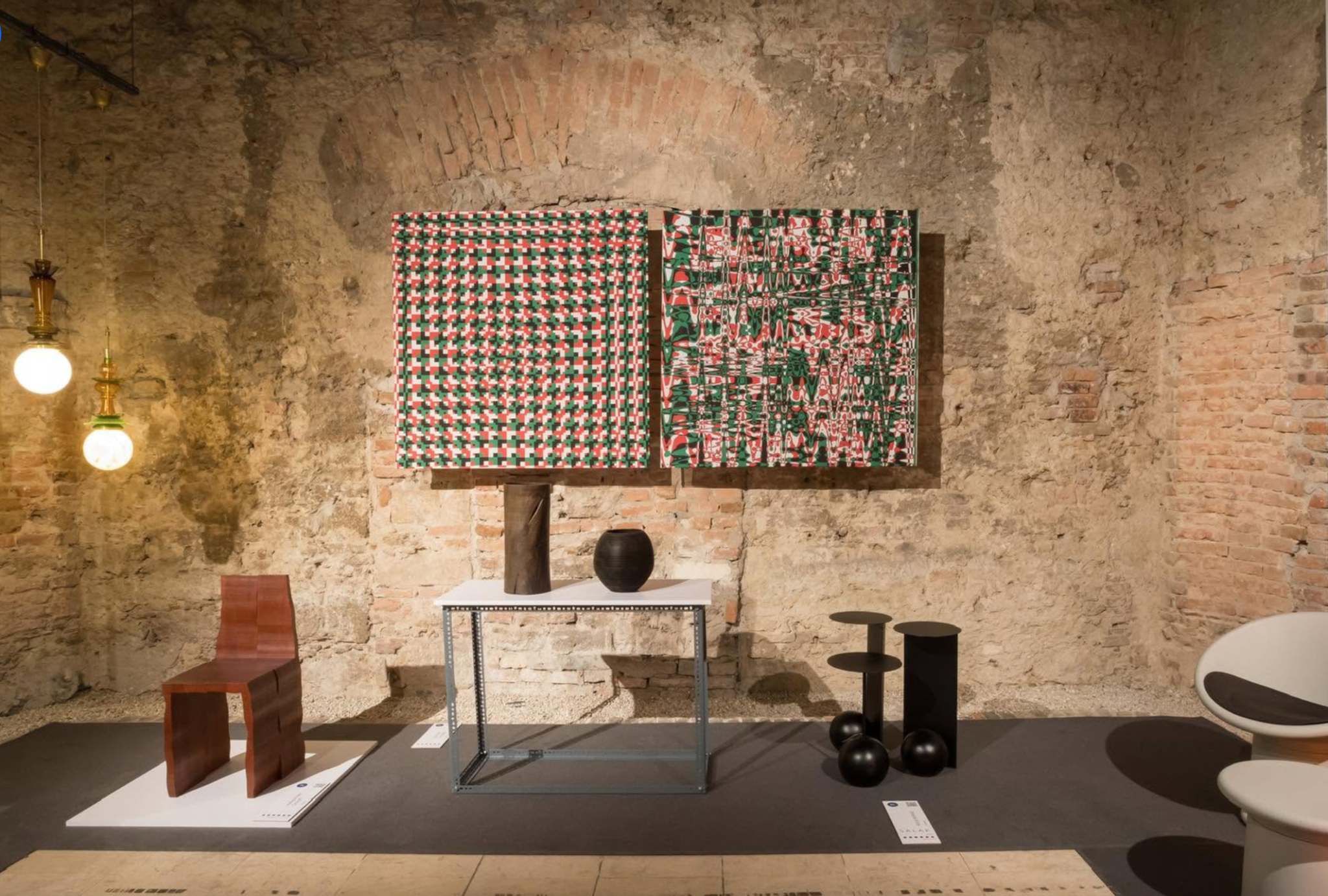
Selected by the curator for presentation during Budapest Design Week 2025. Also presented at Fuzja during Hummus Day, part of the Łódź Festival of Many Cultures, on 14 June 2026. Event photographs →
Praca wybrana przez kuratorkę i prezentowana podczas Budapest Design Week 2025. Pokazywana również podczas Hummus Day w ramach Festiwalu Łódź Wielu Kultur.
View exhibition photograph · Budapest, 2025Zobacz zdjęcie z wystawy · Budapeszt, 2025
Colors That Refuse to Hide · Budapest Design Week · 2025
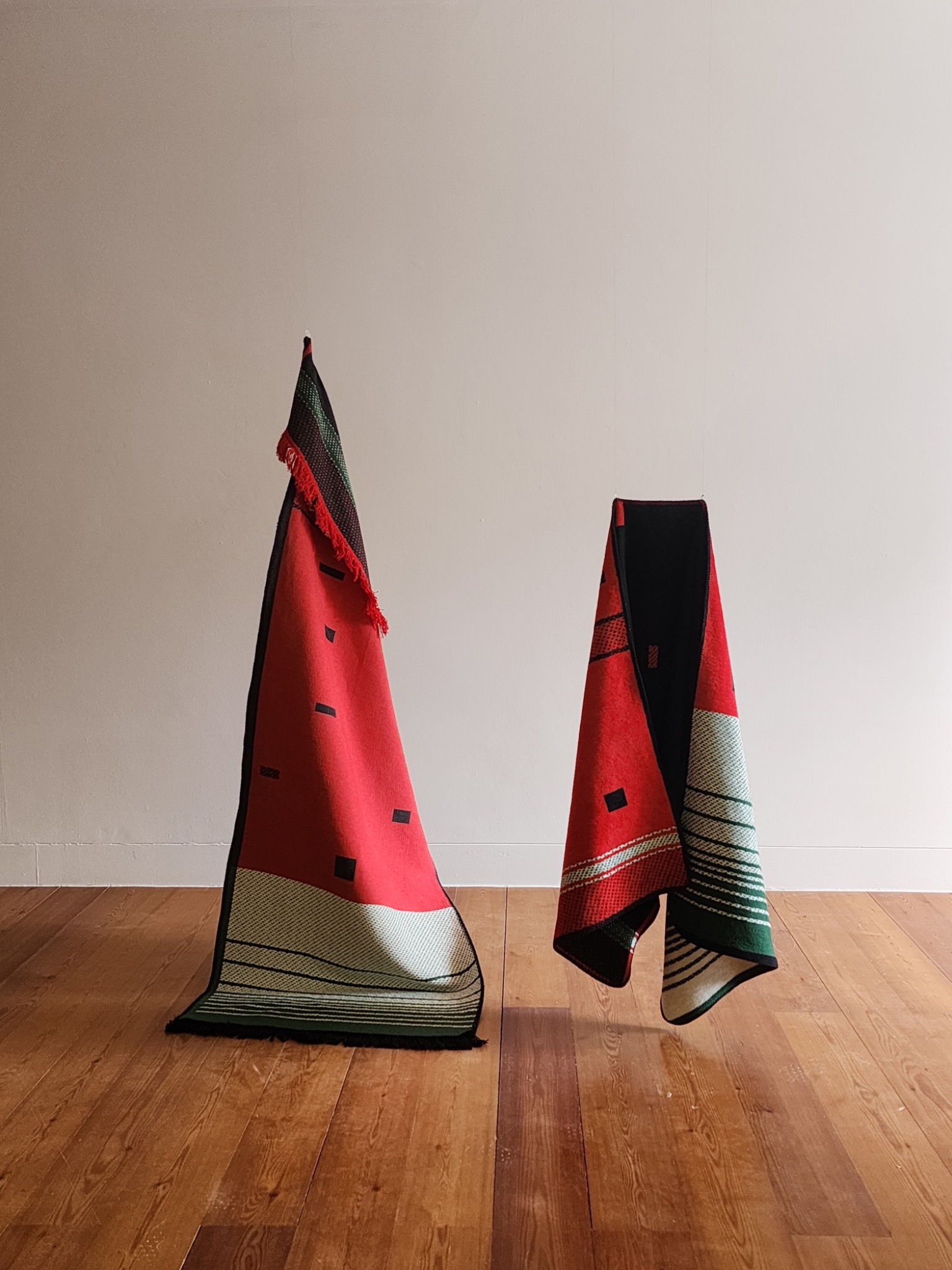
Two Jacquard shawl-blankets addressing comfort, resilience and resistance in solidarity with Palestine. Their brushed and raw surfaces move between shelter and confrontation, art and activism.
Dwa żakardowe szale-koce podejmujące temat ukojenia, odporności i oporu w solidarności z Palestyną. Ich drapane i surowe powierzchnie przemieszczają się między schronieniem i konfrontacją, sztuką i aktywizmem.
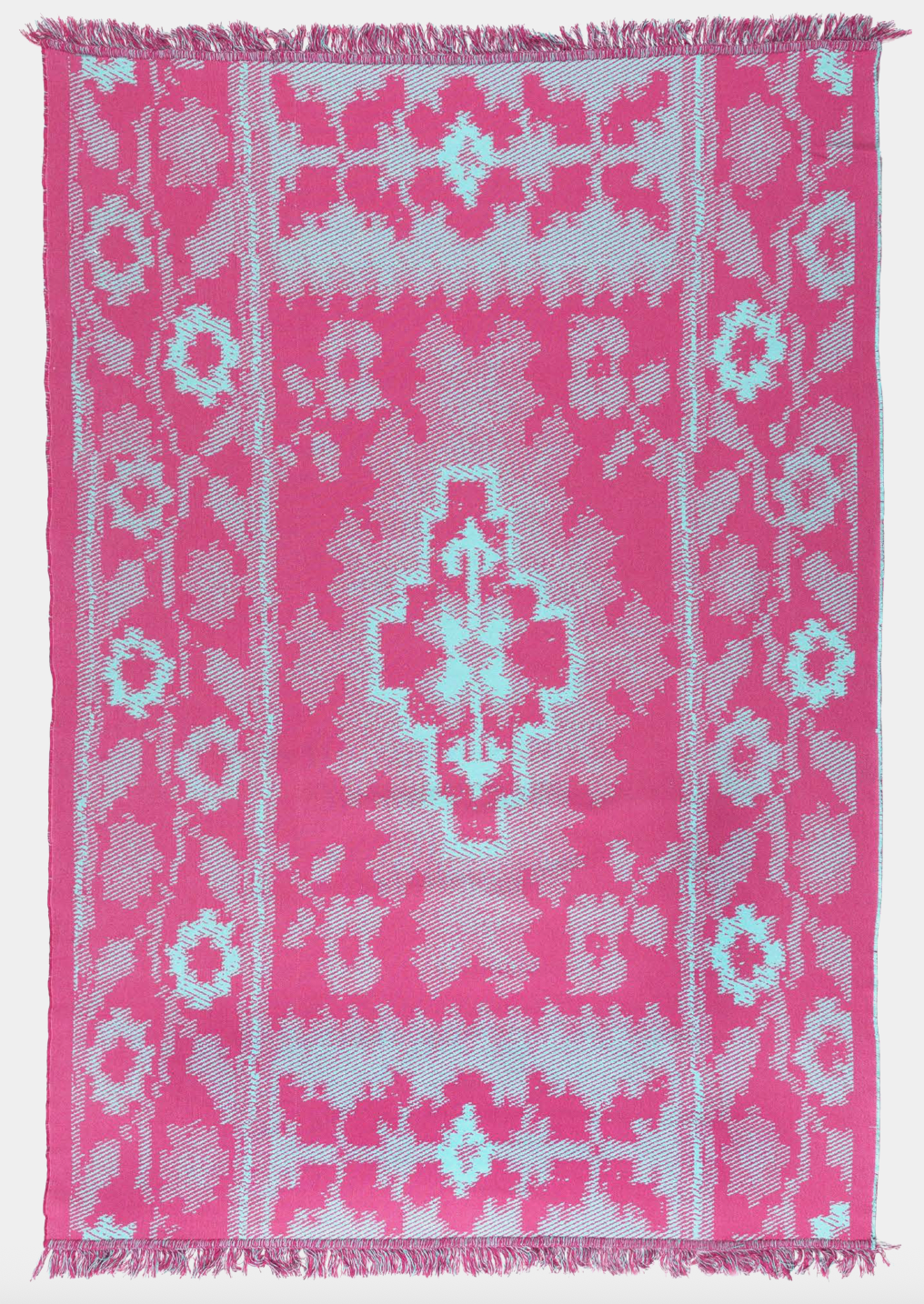
Twisted Tradition grew out of research into traditional textile compositions and motifs across different regions, with particular attention to Eastern Europe. Respect for these patterns and their fully developed forms led the artist to explore contemporary methods of pattern-making and image simplification used in printing.
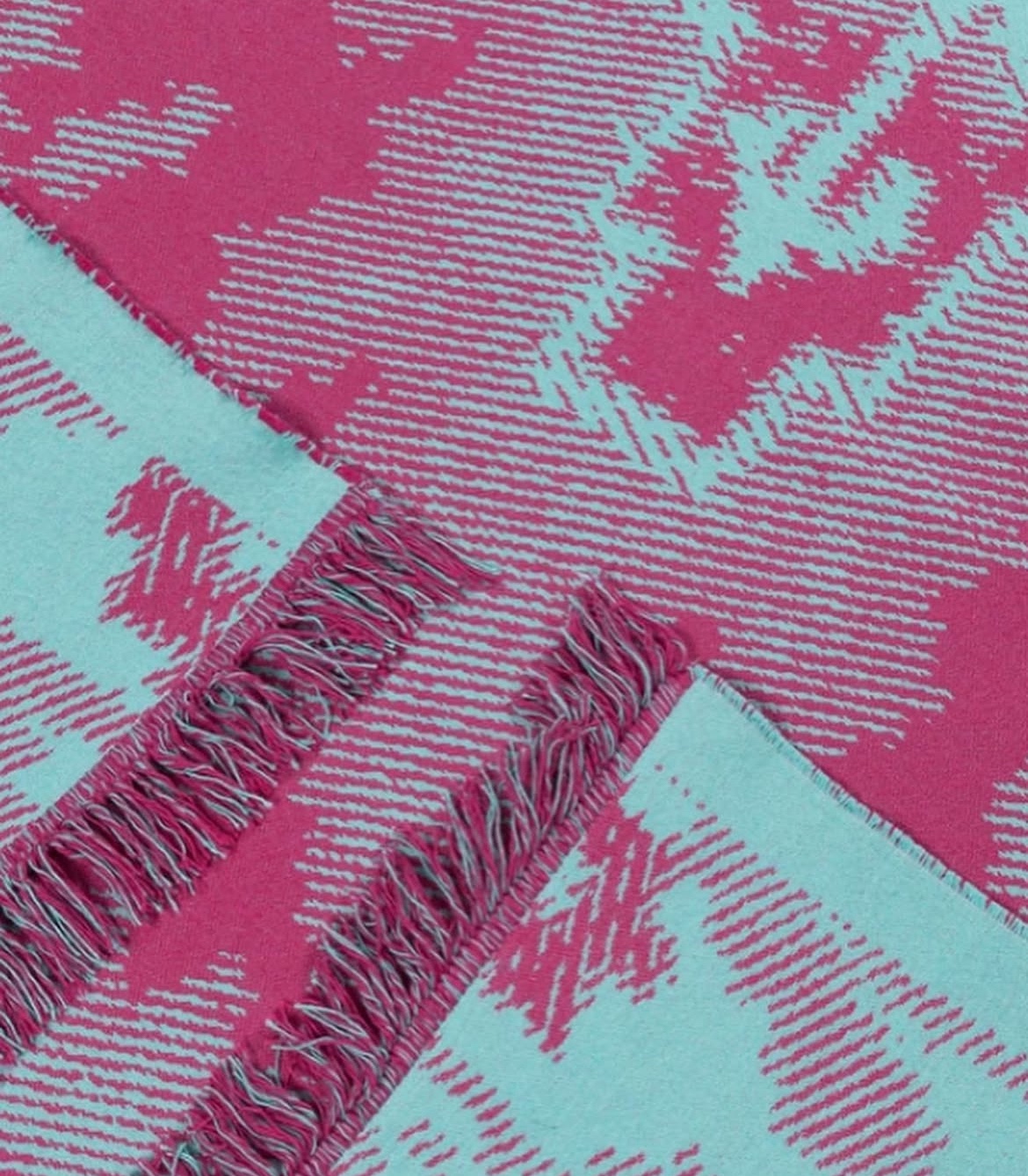
The resulting composition recalls a kilim, but its elements are differentiated by tonal gradients created through a “raster” drawn from twill weave structures. The throw is reversible, with a different colour dominant on each side, allowing a subtle change in the atmosphere of an interior. It can also be used as a wall hanging or curtain.
Tkanina „Twisted Tradition” jest rezultatem poszukiwań i analizy tradycyjnych kompozycji i motywów występujących w tkaninach na wielu obszarach, ze szczególnym uwzględnieniem Europy wschodniej. Szacunek dla wzorów i ich wyczerpującej formy skłonił autorkę do zastosowania dostępnych współcześnie metod budowania wzorów plastycznych i upraszczania obrazu na potrzeby technik drukarskich.
Powstał projekt, w którym przywołująca skojarzenia z kilimami kompozycja wzoru zostaje zbudowana z elementów zróżnicowanych gradientem uzyskanym przy pomocy „rastra” zaczerpniętego ze splotów rządkowych. Pled jest dwustronny i w każdej ze stron przeważa jeden z kolorów, co pozwala na łatwą i delikatną zmianę atmosfery we wnętrzu. Tkanina ta sprawdzi się również jako dekoracja ścienna czy zasłona.
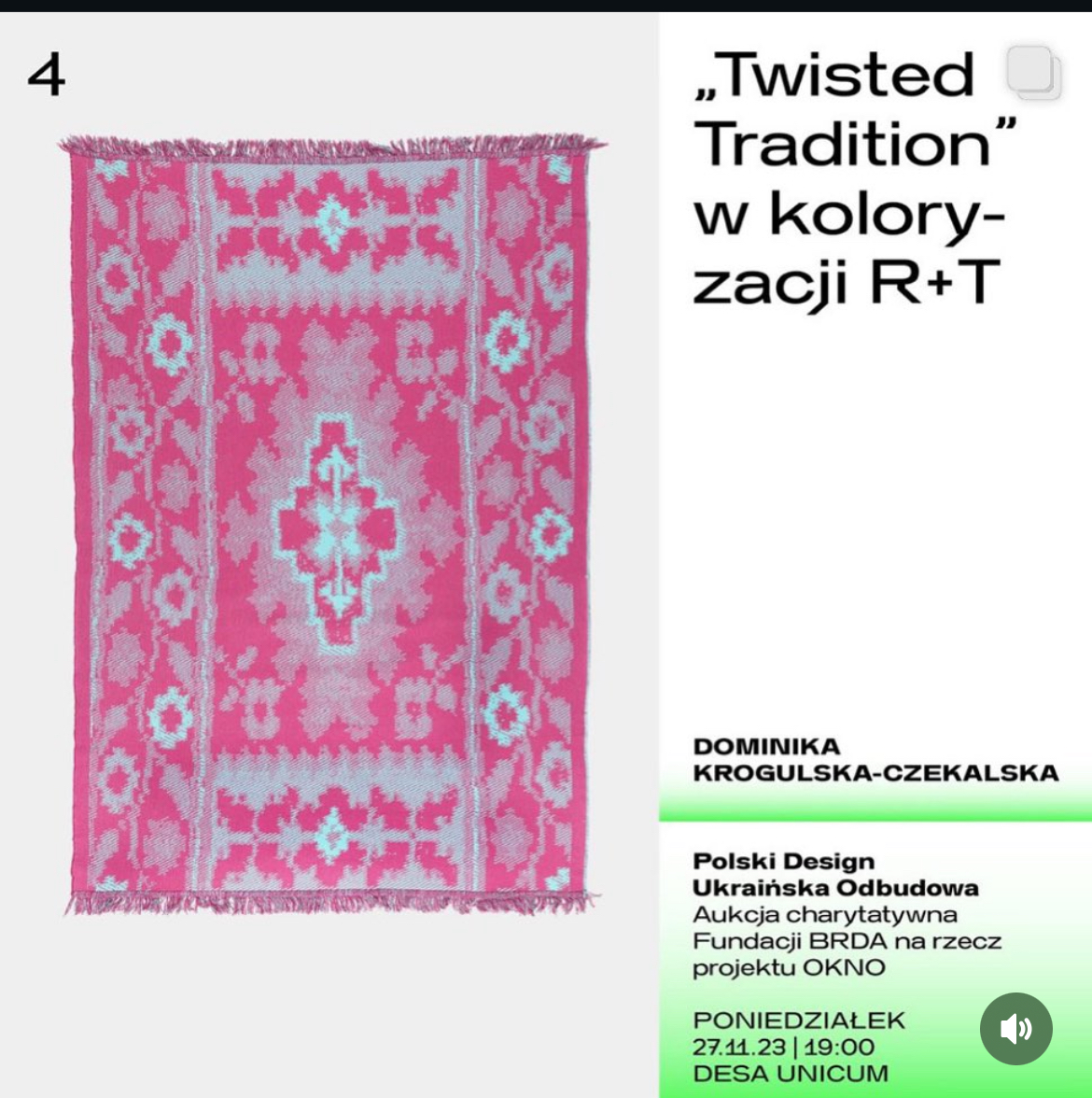
Presented at the charity auction Polski Design — Ukraińska Odbudowa · DESA Unicum, Warsaw · 27 November 2023 · Supporting the BRDA Foundation’s OKNO project.
Prezentowana na aukcji charytatywnej Polski Design — Ukraińska Odbudowa · DESA Unicum, Warszawa · 27 listopada 2023 · Na rzecz projektu OKNO Fundacji BRDA.
R+T · 244 × 167 cm · Cotton / bawełna 60%, acrylic / akryl 35%, polyester / poliester 5% DESA Unicum · 2023 · Lot 4
Twisted Tradition · R+T · Material supplied by the artistAuction documentation · 3 more imagesDokumentacja aukcji · 3 kolejne obrazy
Twisted Tradition · Detail · Material supplied by the artistDESA Unicum / Fundacja BRDA · Auction material · 2023DESA Unicum / Fundacja BRDA · Auction announcement · 27.11.2023
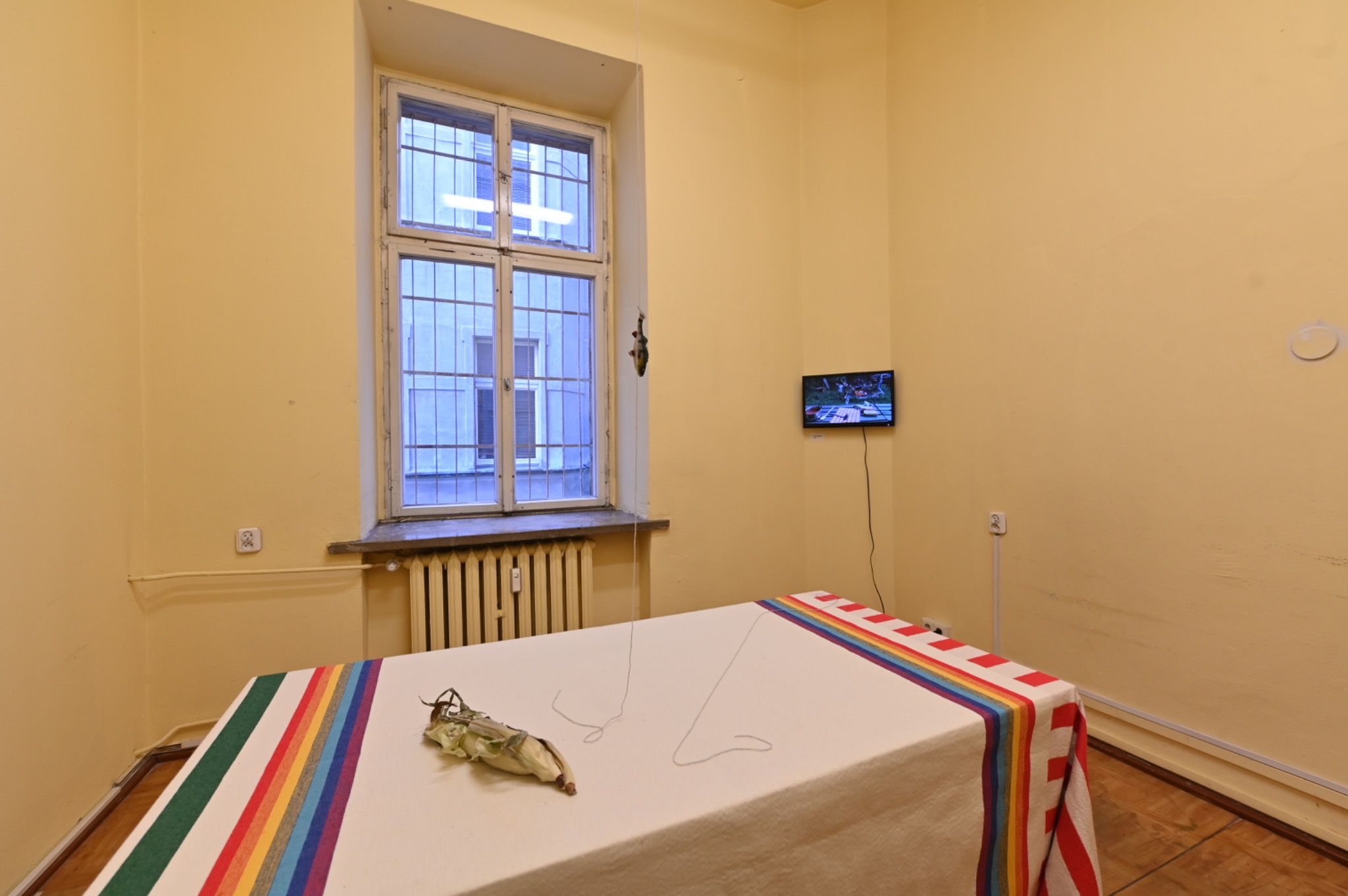
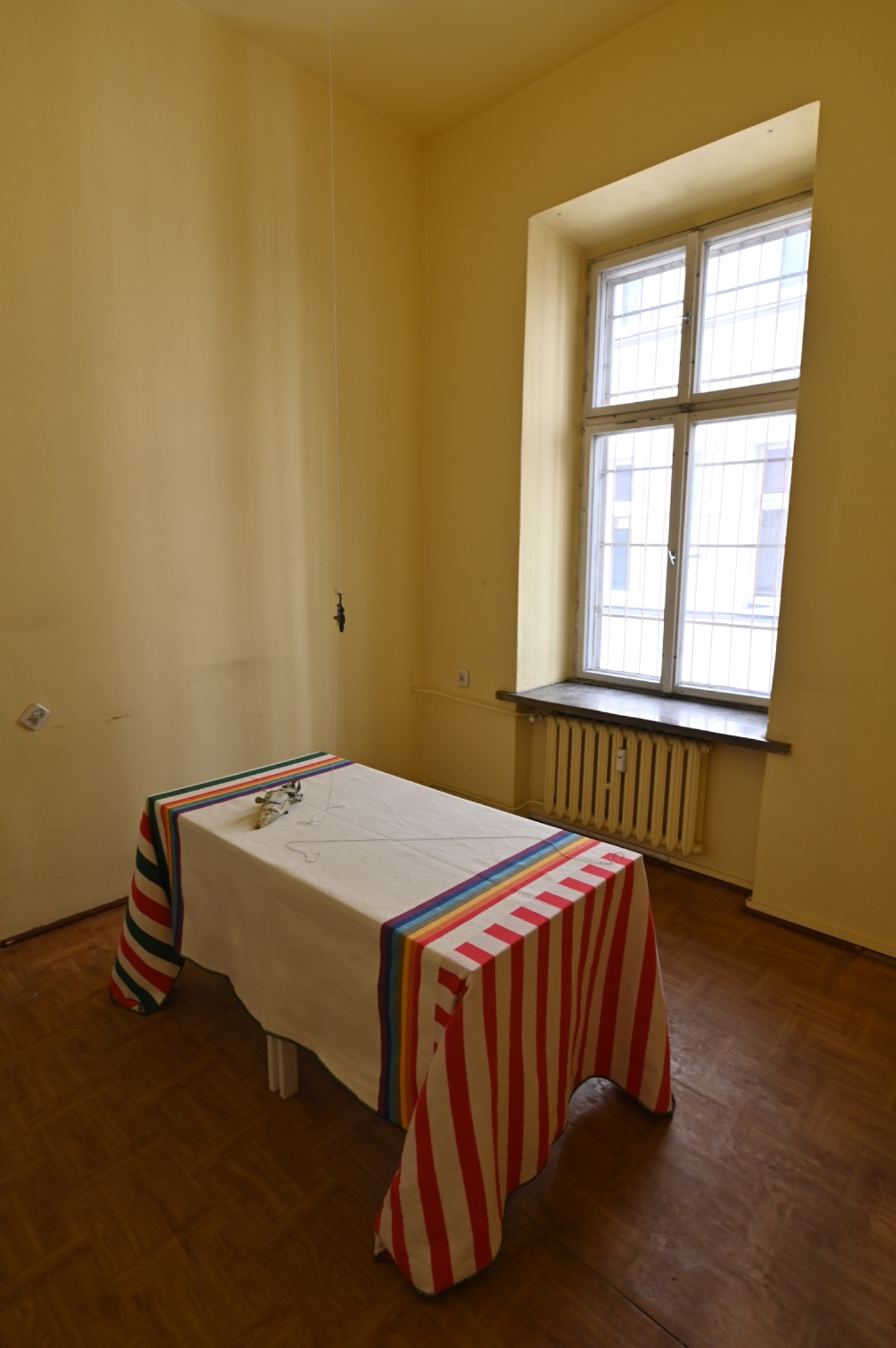
What brings people together most naturally? I think it is sharing a meal at the same table. Covering that table with a cloth lends it a ceremonial quality, and everything placed upon it takes on something of the sacred.
I have met many remarkable people around a table. Among them was Barnaba Bonati, whose mother is Polish and whose father was Italian. Barnaba is also a food lover who pursues his passion in many ways. His story of polenta served directly on a table covered with oilcloth stayed with me and inspired me to create a textile for the table. Beyond satisfying hunger, the ritual of preparing a meal in a cauldron over a fire also helped strengthen human bonds. Various grains and groats prepared in ways similar to polenta are, in many cultures, associated with sustenance that saves lives in times of crisis. Rodrigo Avila comes from Chile, in South America, the continent from which maize reached Europe and became the grain most commonly used to make polenta.
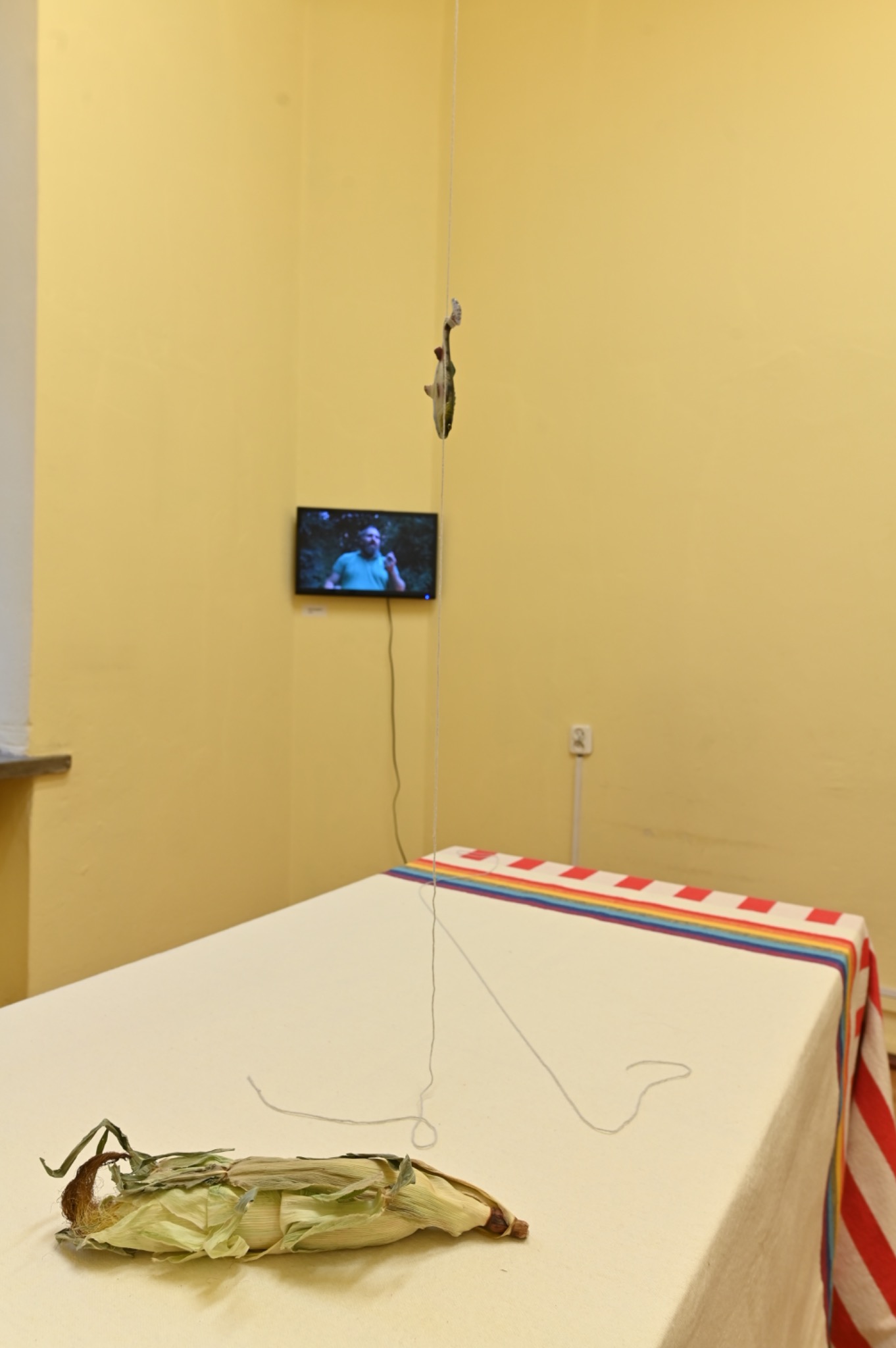
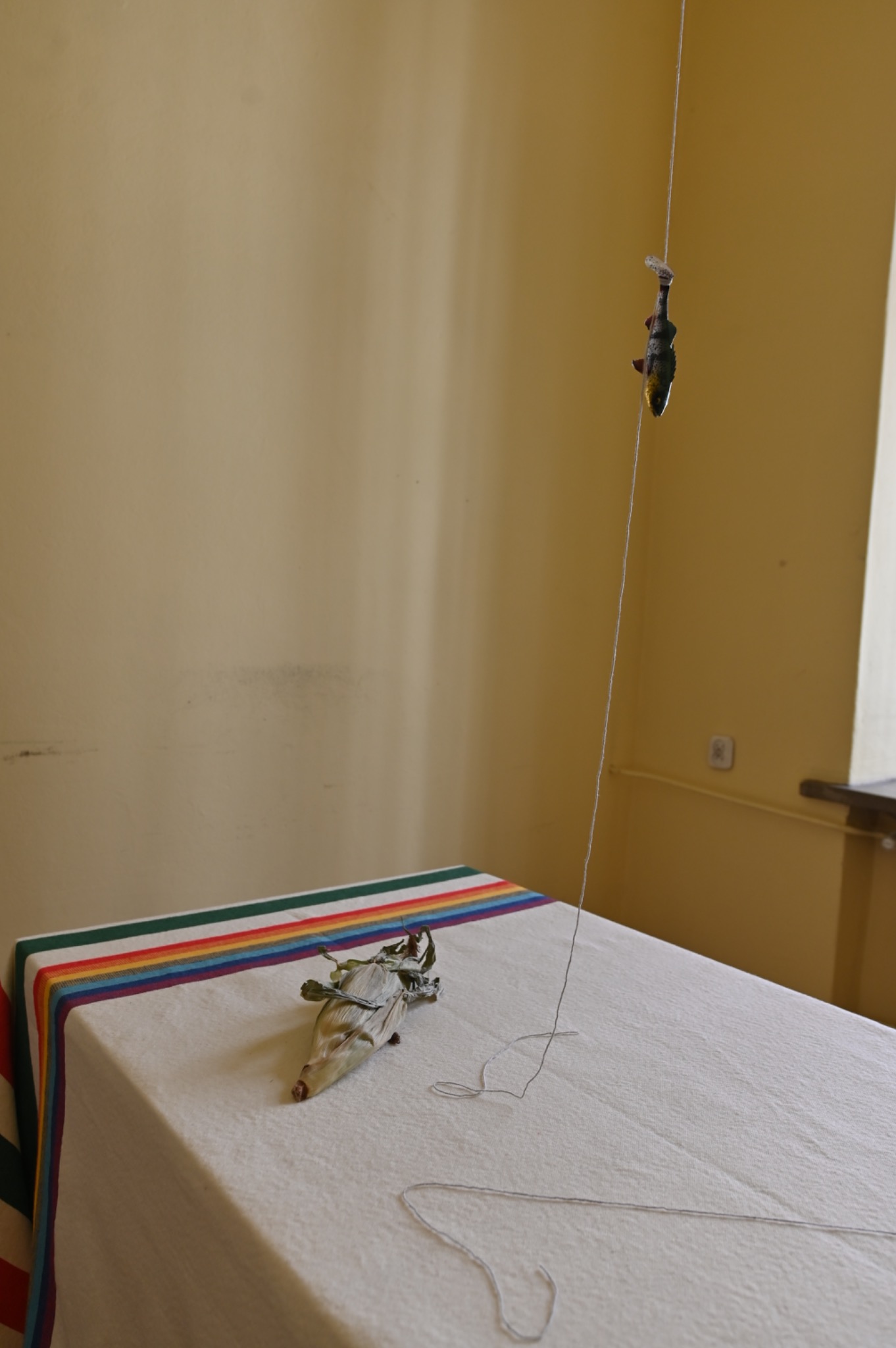
In Italy, Barnaba listened to many stories about polenta and the ways it was prepared and served. These included cutting it with string and flavouring it with an aromatic fish, of which there was too little to feed everyone at the table. The fish could only lend its flavour to each portion; leftover polenta was kept until morning, then dipped in milk and eaten as a new dish.
Politalenta is a symbolic record of our encounter. The tablecloth was designed to leave the focus on whatever might be placed upon it. Its principal motifs run along the border that falls over the edges of the table, drawing on colour codes associated with Italy, Poland and a multicultural society.
The film was directed by Barnaba Bonati, with cinematography by Rodrigo Avila, both graduates of the Łódź Film School.
Text: Dominika Krogulska-Czekalska
I was born in Łódź and have lived here ever since. Several years ago, while coordinating an educational project, I met many interesting people whose passion for food led them to explore fascinating areas of culture. In my own practice, I work primarily with textile: its closeness to everyday human life makes it a powerful means of bringing different communities and cultures together.
Presented in Zbliżenia, curated by Artur Chrzanowski for the Festival Łódź of Four Cultures.
Textile: Dominika Krogulska-Czekalska Film and performance: Barnaba Bonati Cinematography: Rodrigo Avila Exhibition photography: Zbigniew Olszyna
Zbliżenia · 9–17 September 2022 Piotrkowska 147, Łódź · Festival Łódź of Four Cultures
Politalenta · Zbliżenia, 2022 · Photo: Zbigniew Olszyna.View gallery · 3 more photographs
Politalenta · Zbliżenia, 2022 · Photo: Zbigniew Olszyna.Politalenta · Zbliżenia, 2022 · Photo: Zbigniew Olszyna.Politalenta · Zbliżenia, 2022 · Photo: Zbigniew Olszyna.
2021–2022
Białostocka 2.0
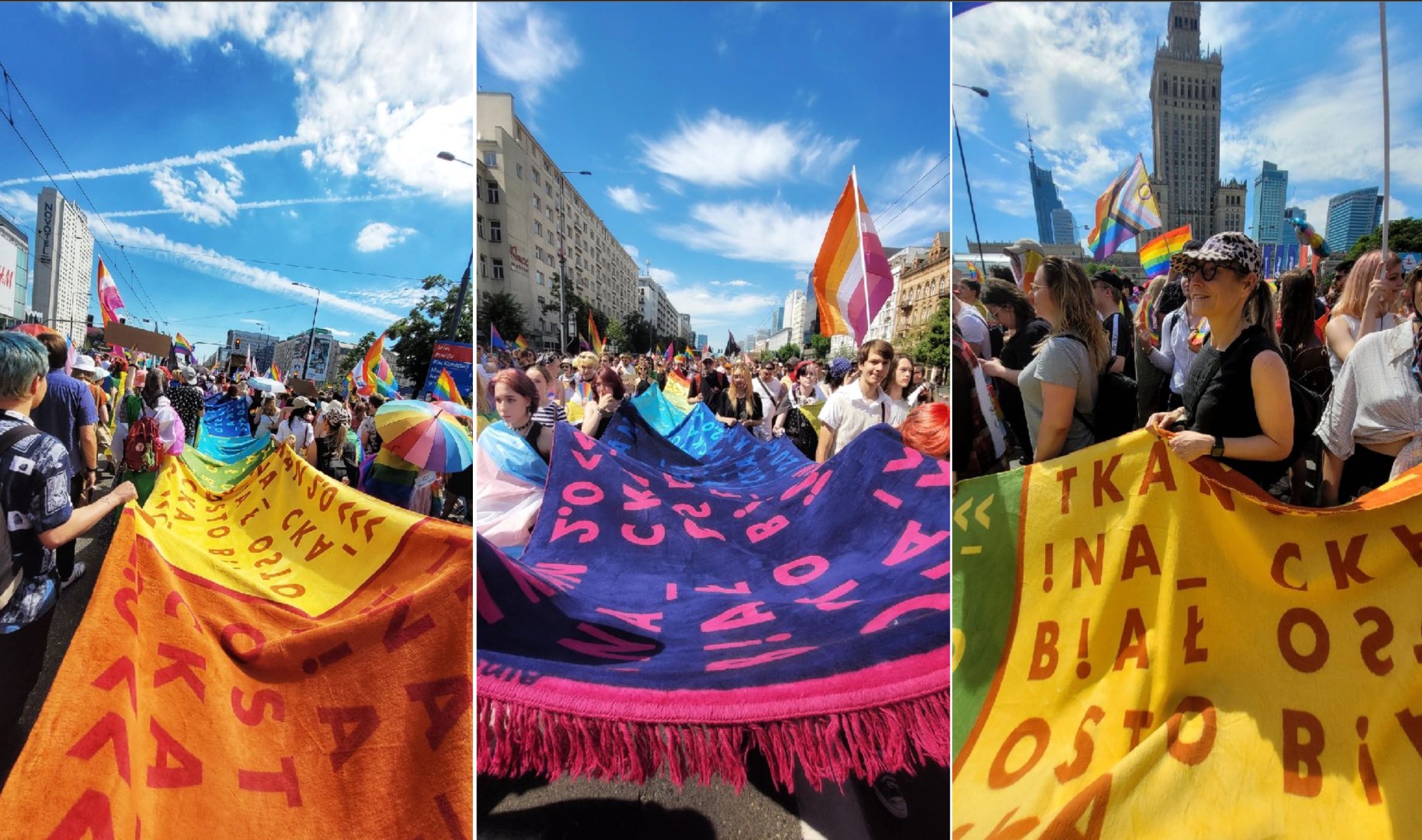
An eighteen-metre Jacquard blanket-banner conceived as a textile of protest and solidarity. First shown at BIEN 2021 in Slovenia, it later left the exhibition space and was carried collectively through Warsaw during the 2022 Equality Parade.
Osiemnastometrowy żakardowy koco-baner pomyślany jako tkanina protestu i solidarności. Po prezentacji na BIEN 2021 w Słowenii opuścił przestrzeń wystawienniczą i był niesiony wspólnie ulicami Warszawy podczas Parady Równości w 2022 roku.
Jacquard · collective action · film: Don’t Rain on My Parade
Białostocka 2.0 · Equality Parade, Warsaw · Photos: Anna Ścisłowska.Parade film trailer · Białostocka 2.0 appears at 0:47.
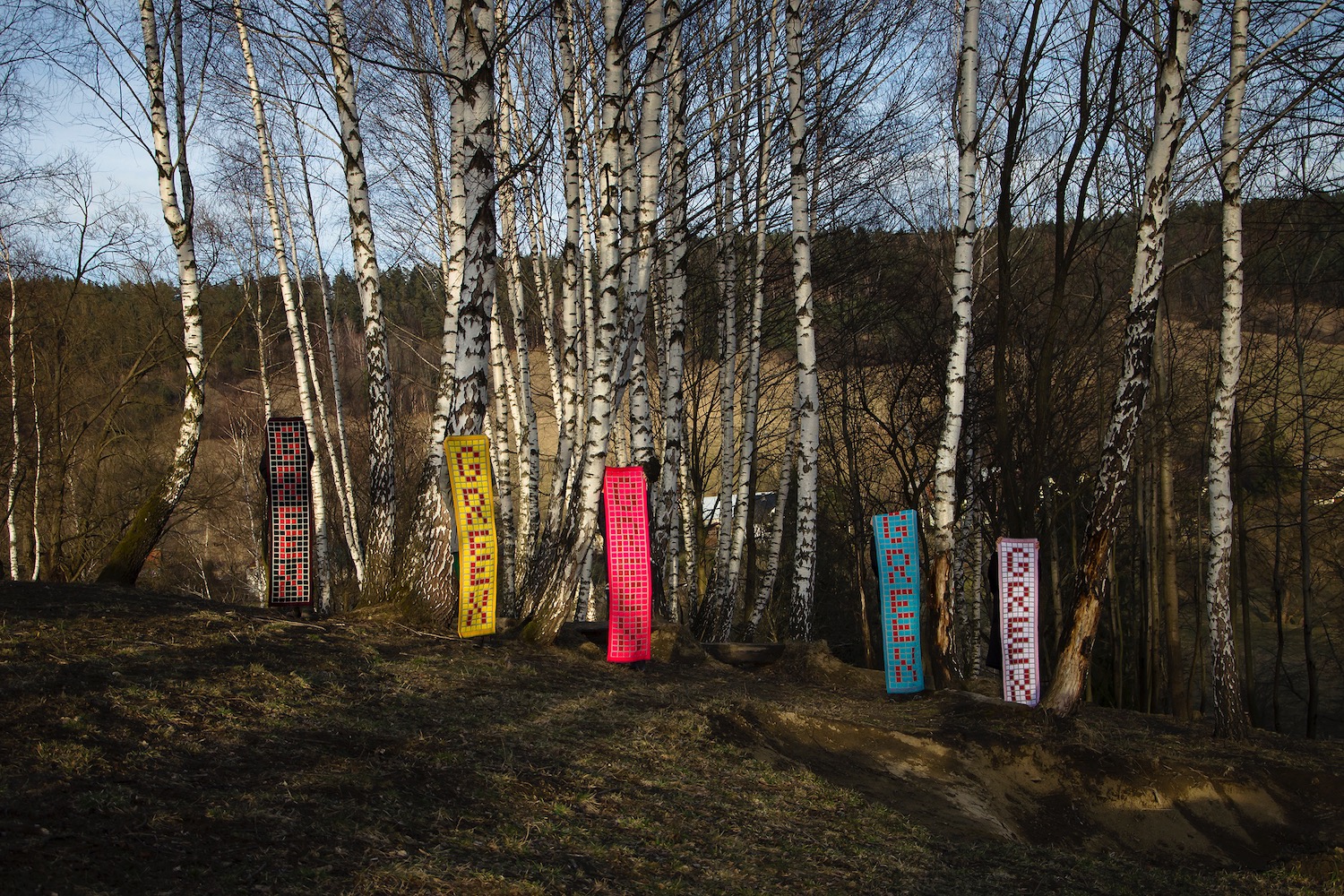
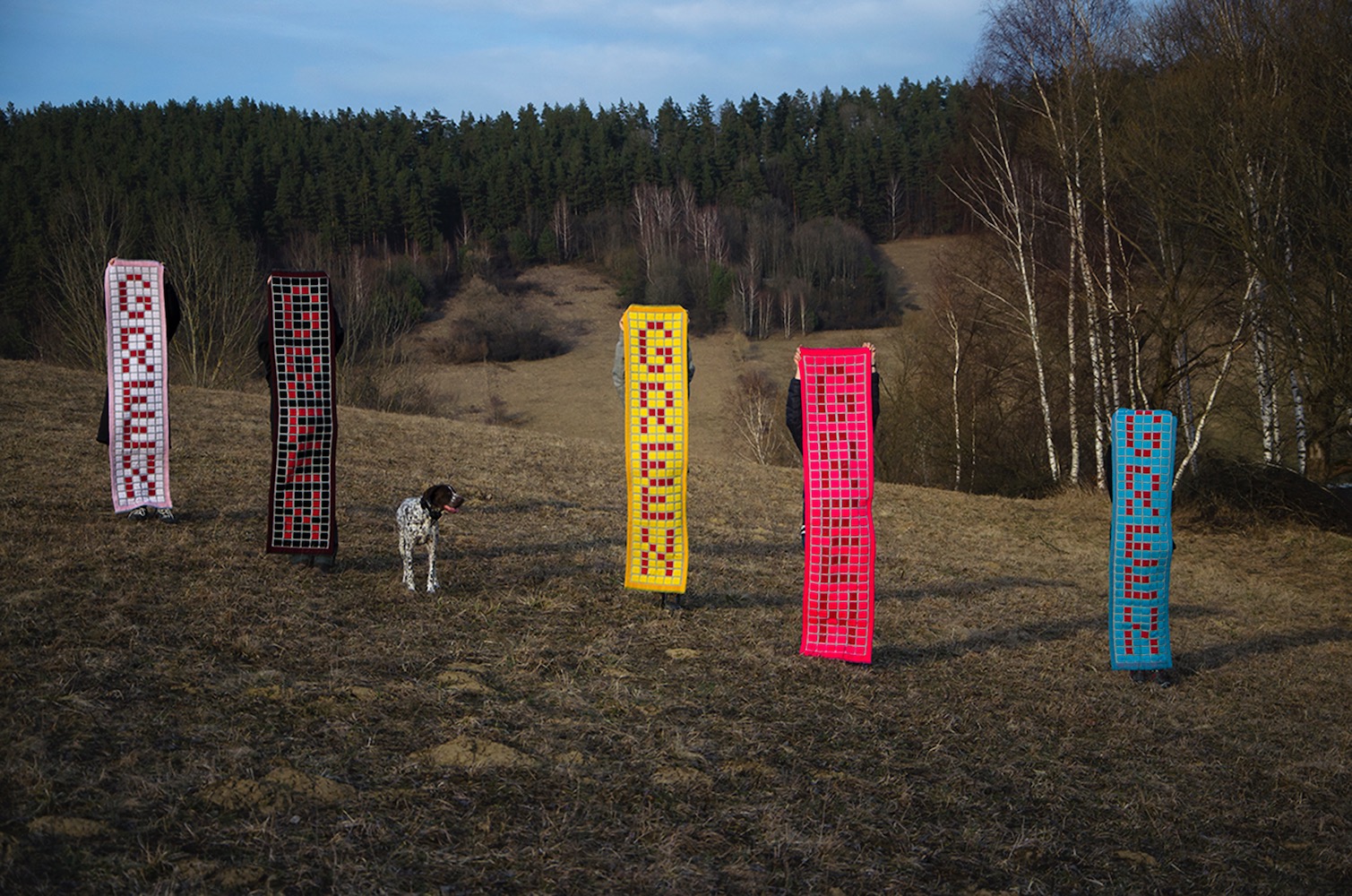
An urban textile proposition in which green enters into friction with concrete, construction and the geometric discipline of the city. Presented at the WTA Biennial in Madrid.
Miejska propozycja tekstylna, w której zieleń wchodzi w tarcie z betonem, konstrukcją i geometryczną dyscypliną miasta. Prezentowana na Biennale WTA w Madrycie.
Premiered at the VIII WTA International Biennial of Contemporary Textile Art · The Sustainable City · Madrid, 2019
It’s Not Easy Being Green in the City · Photo: P. Słomiński.View gallery · 1 more photograph
It’s Not Easy Being Green in the City · Photo: P. Słomiński.
2018
JaZZcquard
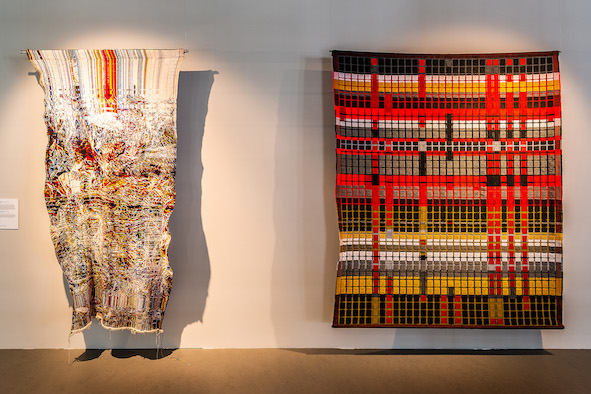
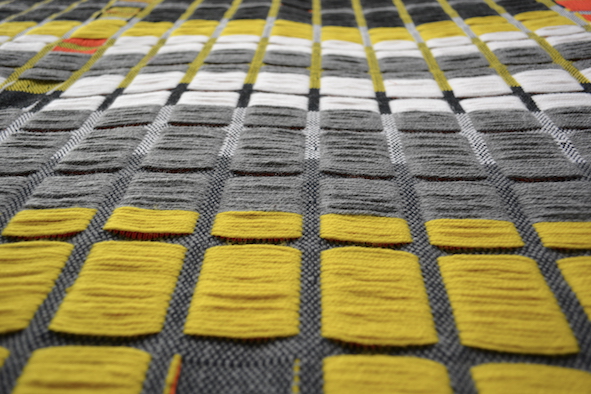
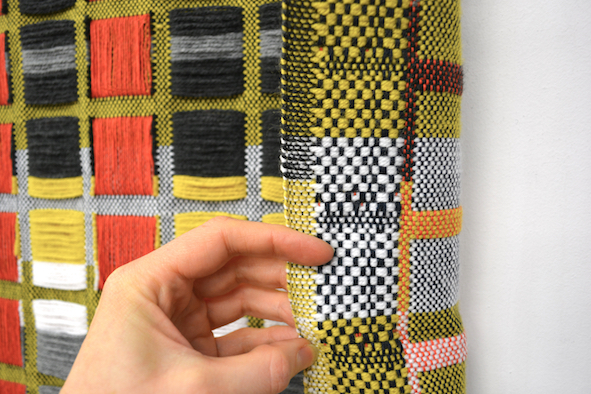
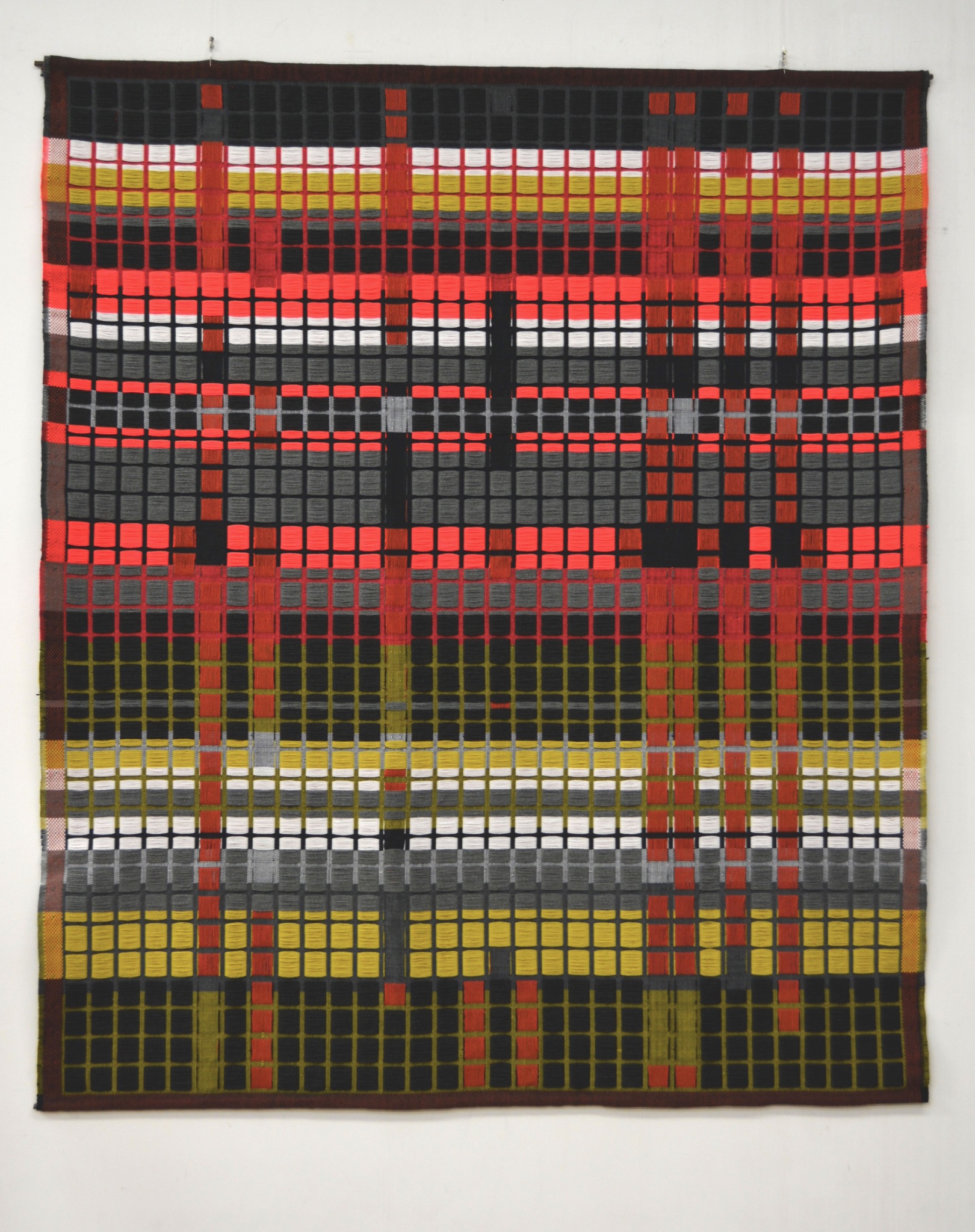
JaZZcquard explores how to move beyond the constraints of repeat-pattern Jacquard design. Made from a single small pattern — a chain of hand-punched Jacquard cards — it tests how a previously prepared matrix can become the basis for widely differing woven structures.
Pulsating colour and interventions in the cloth break the rhythm of the original repeat. As it comes off the loom, the textile resembles a monotonous march, changing colour as the weaving progresses. Through cutting, it becomes an improvisation that reveals new directions and relationships of colour and tonal value.
These interventions are made possible by a precisely planned double-cloth ground: a harmonic foundation on which radical cuts allow a visual and haptic melody to emerge.
Praca jest próbą wyjścia poza ograniczenia, jakim musi sprostać projektant raportowanych tkanin żakardowych. JaZZcquard jest kolejną tkaniną powstałą na bazie jednej niewielkiej wzornicy — łańcucha ręcznie dziurkowanych kart żakardowych — i zarazem próbą wykorzystania wykonanej wcześniej matrycy w jak najbardziej różnorodny sposób.
Tym razem pulsujący kolor oraz interwencja w strukturę pozwalają przełamać rytm pierwotnego raportu. Utwór, który tuż po wytkaniu jest rodzajem monotonnego „marszu”, zmieniającego barwę wraz z postępem tkania, staje się improwizacją ujawniającą nowe kierunki oraz relacje barwne i walorowe.
Modyfikacje były możliwe dzięki precyzyjnie zaplanowanej podwójnej strukturze bazowej — harmonicznej podstawie, na której za pomocą radykalnych cięć wybrzmiewa ta specyficzna, wizualno-haptyczna melodia.
2018 · 190 × 210 cm Cotton, wool and acrylic yarns Double-cloth Jacquard, two warps and two wefts; cut interventions Premiere: 16th International Triennial of Tapestry, Central Museum of Textiles, Łódź, 2019
2018 · 190 × 210 cm Przędza bawełniana, wełniana i akrylowa Tkanina żakardowa, dwuosnowowa, dwuwątkowa; ingerencja — wycinanie Premiera: 16. Międzynarodowe Triennale Tkaniny, Centralne Muzeum Włókiennictwa w Łodzi, 2019
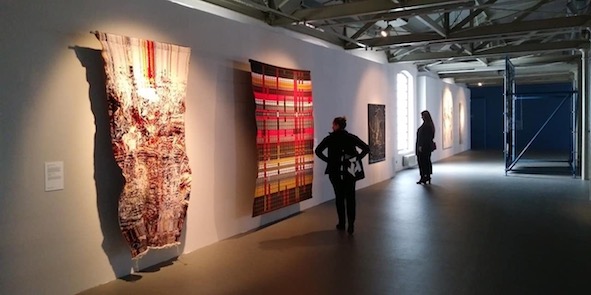
Exhibited in “Anni Albers. Filozofka nitki” · Dom Norymberski, Kraków · 18 October–6 November 2026 Curators: Iwona Demko and Renata Kopyto
Prezentowana na wystawie „Anni Albers. Filozofka nitki” · Dom Norymberski, Kraków · 18.10–6.11.2026 Kuratorki: Iwona Demko i Renata Kopyto
JaZZcquard · 16th International Triennial of Tapestry · Central Museum of Textiles, Łódź · 2019.View gallery · 5 more photographs
JaZZcquard · Double-cloth Jacquard with cut interventions.JaZZcquard · Double-cloth Jacquard with cut interventions.JaZZcquard · Double-cloth Jacquard with cut interventions.JaZZcquard · 16th International Triennial of Tapestry · Central Museum of Textiles, Łódź · 2019.JaZZcquard · 16th International Triennial of Tapestry · Central Museum of Textiles, Łódź · 2019.
2017–2019
Grid works
A family of works in which the grid is never merely formal. Jacquard structure becomes notation, urban plan, musical rhythm and a system that can be followed, disturbed or made to carry colour against its assigned order.
Rodzina prac, w których siatka nigdy nie jest wyłącznie formalna. Struktura żakardowa staje się notacją, planem miasta, rytmem muzycznym i systemem, który można realizować, zakłócać lub zmuszać do przenoszenia koloru wbrew przypisanemu porządkowi.
JAzzcquard · It’s Not Easy Being Green in the City · RainBow · Lodz_Ldz_textile city
2017–
RainBow / Lodz_Ldz_textile city
Works that use the structural grid to think about colour, belonging and the textile identity of Łódź. The city is approached not as a motif placed on cloth, but as a system already woven from industry, labour, memory and change.
Prace wykorzystujące strukturalną siatkę do myślenia o kolorze, przynależności i tekstylnej tożsamości Łodzi. Miasto nie jest motywem umieszczonym na tkaninie, lecz systemem już utkanym z przemysłu, pracy, pamięci i zmiany.
2015
Textile as a Medium of Critical Statement
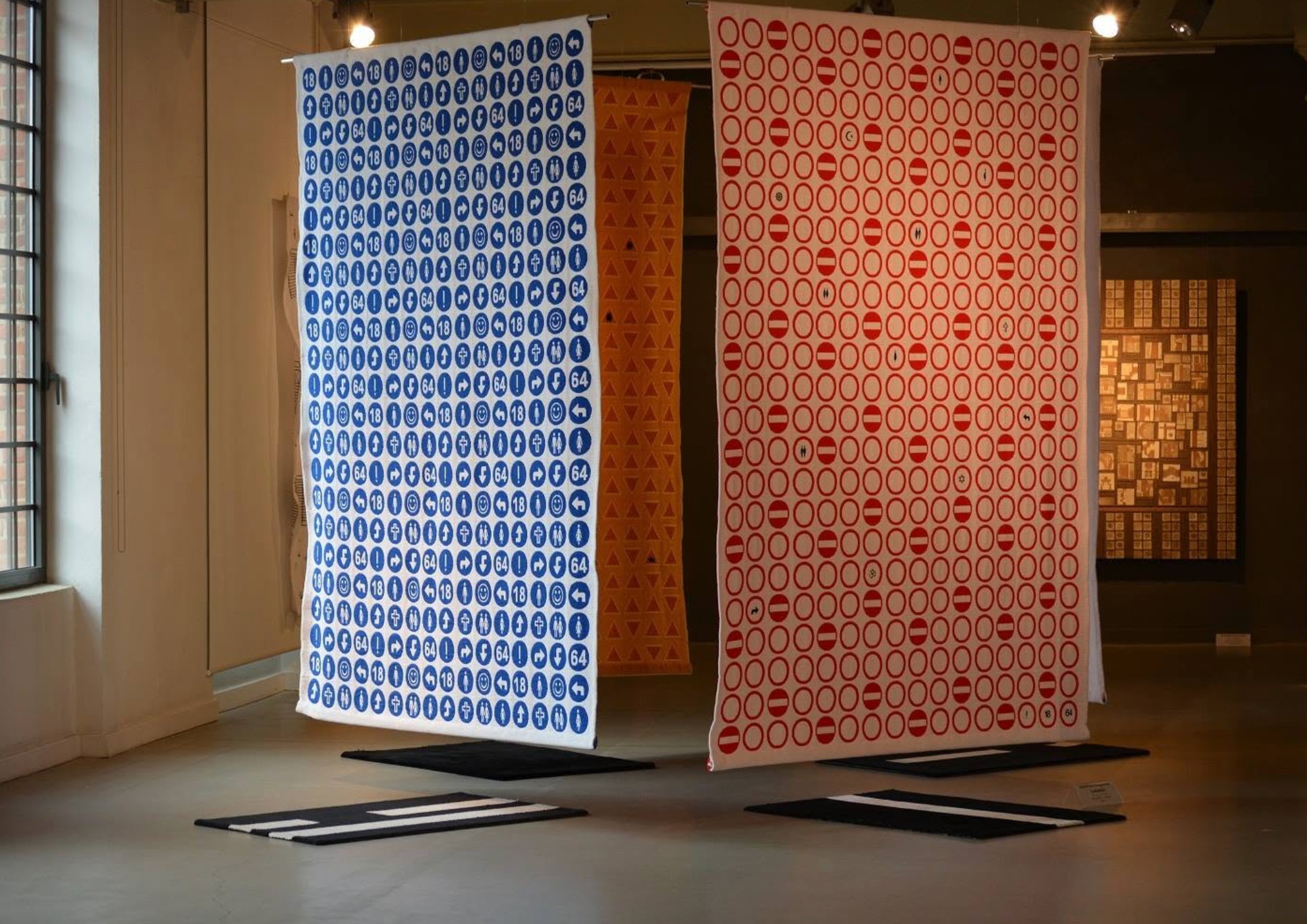
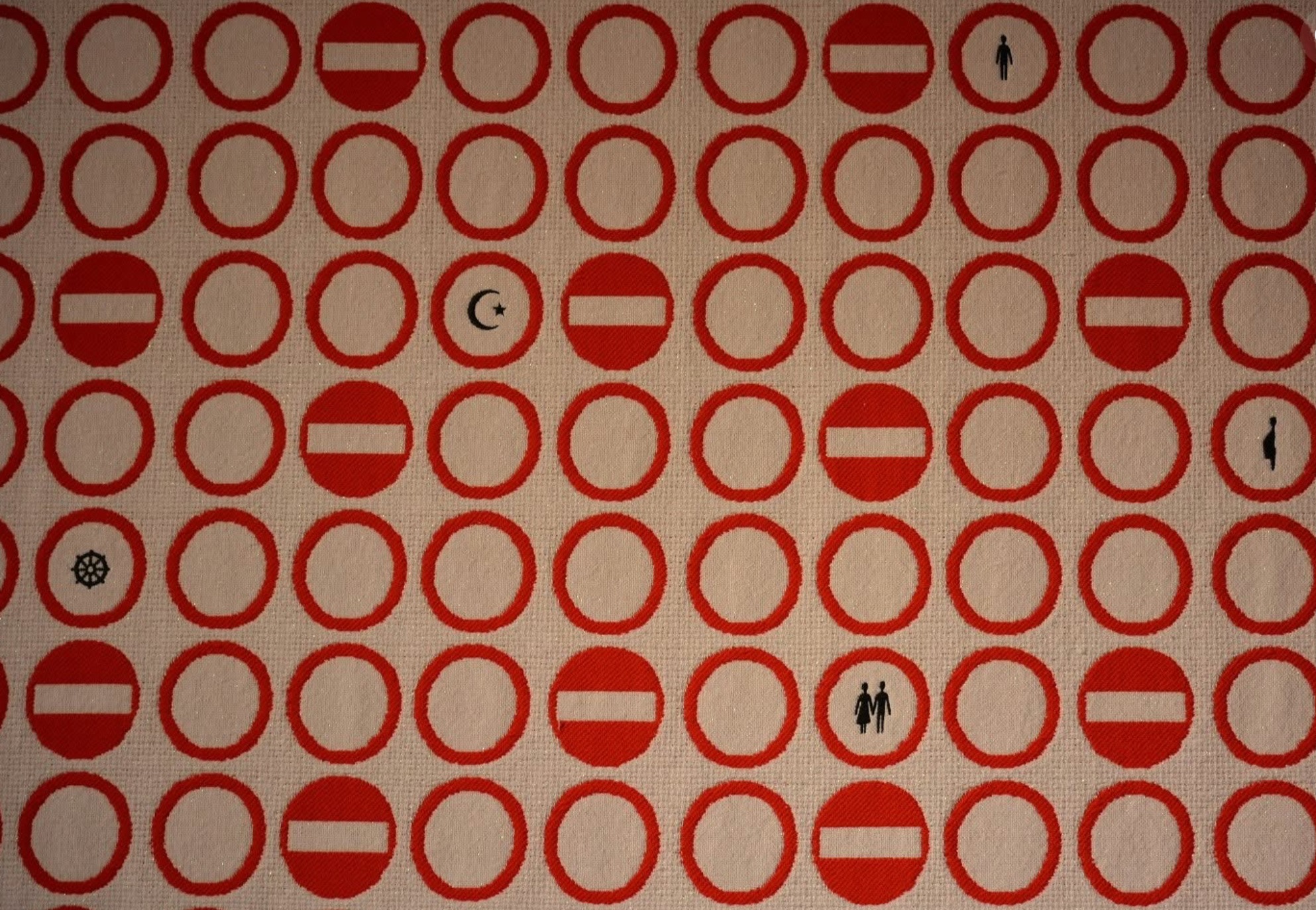
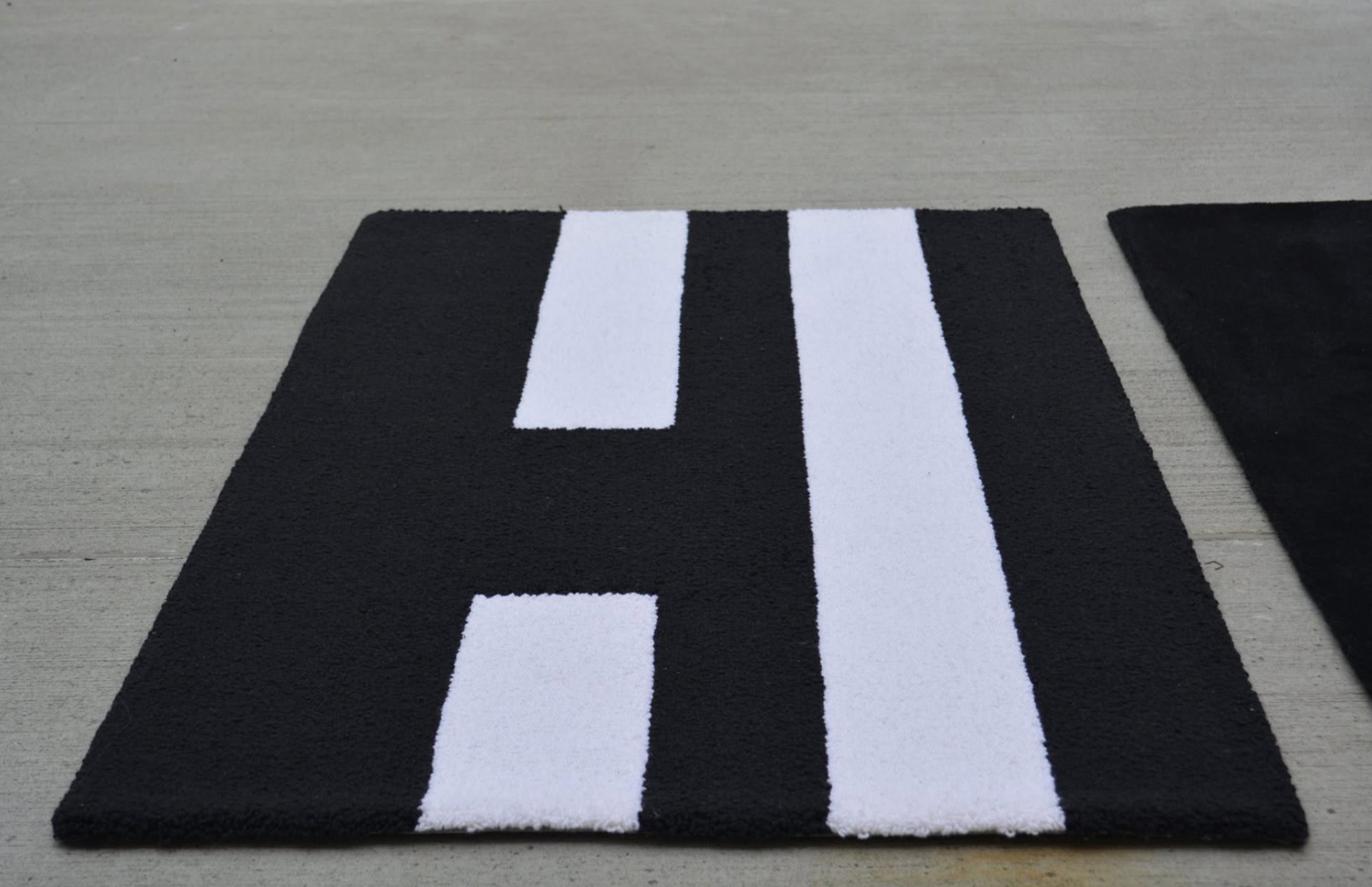
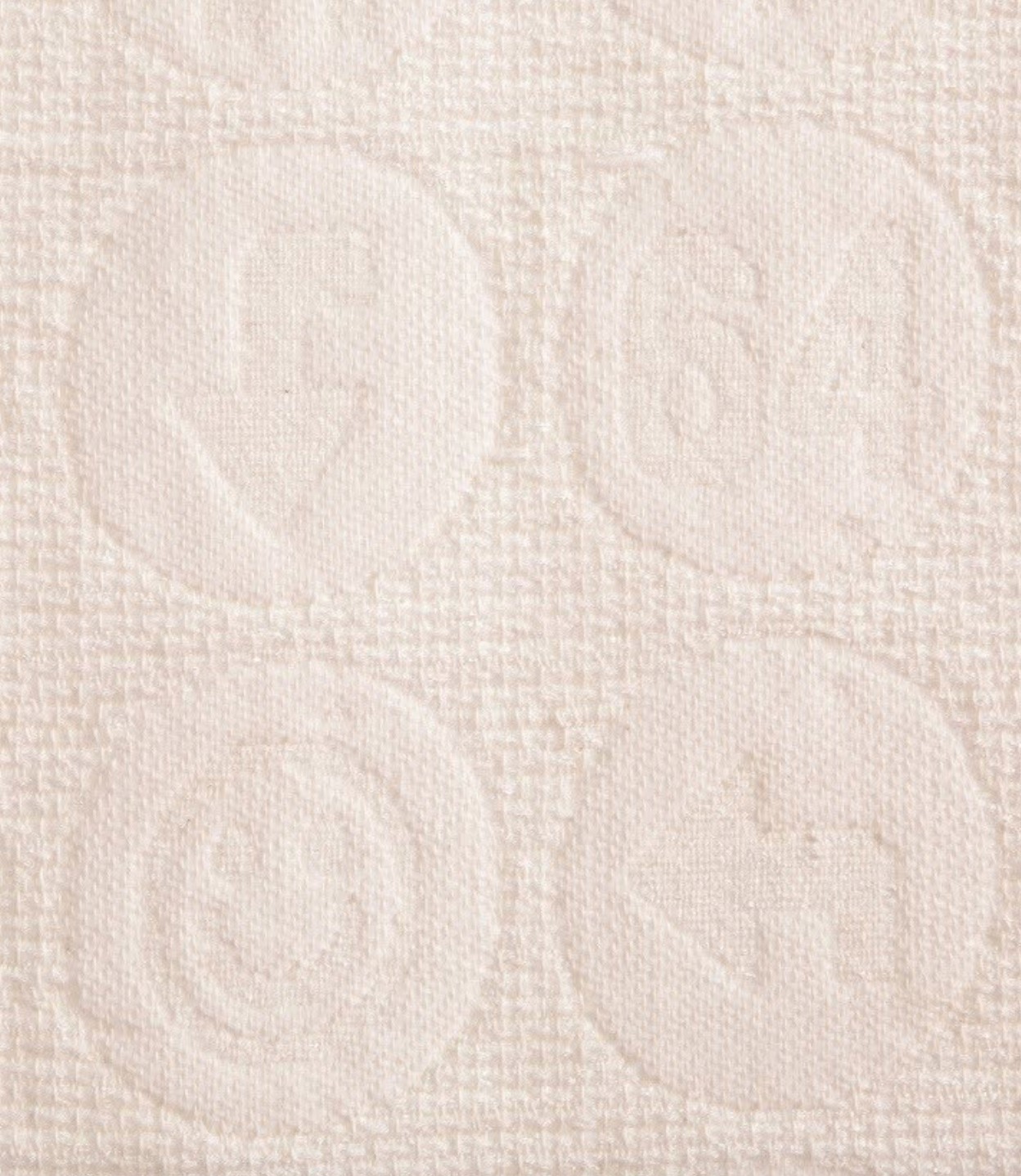
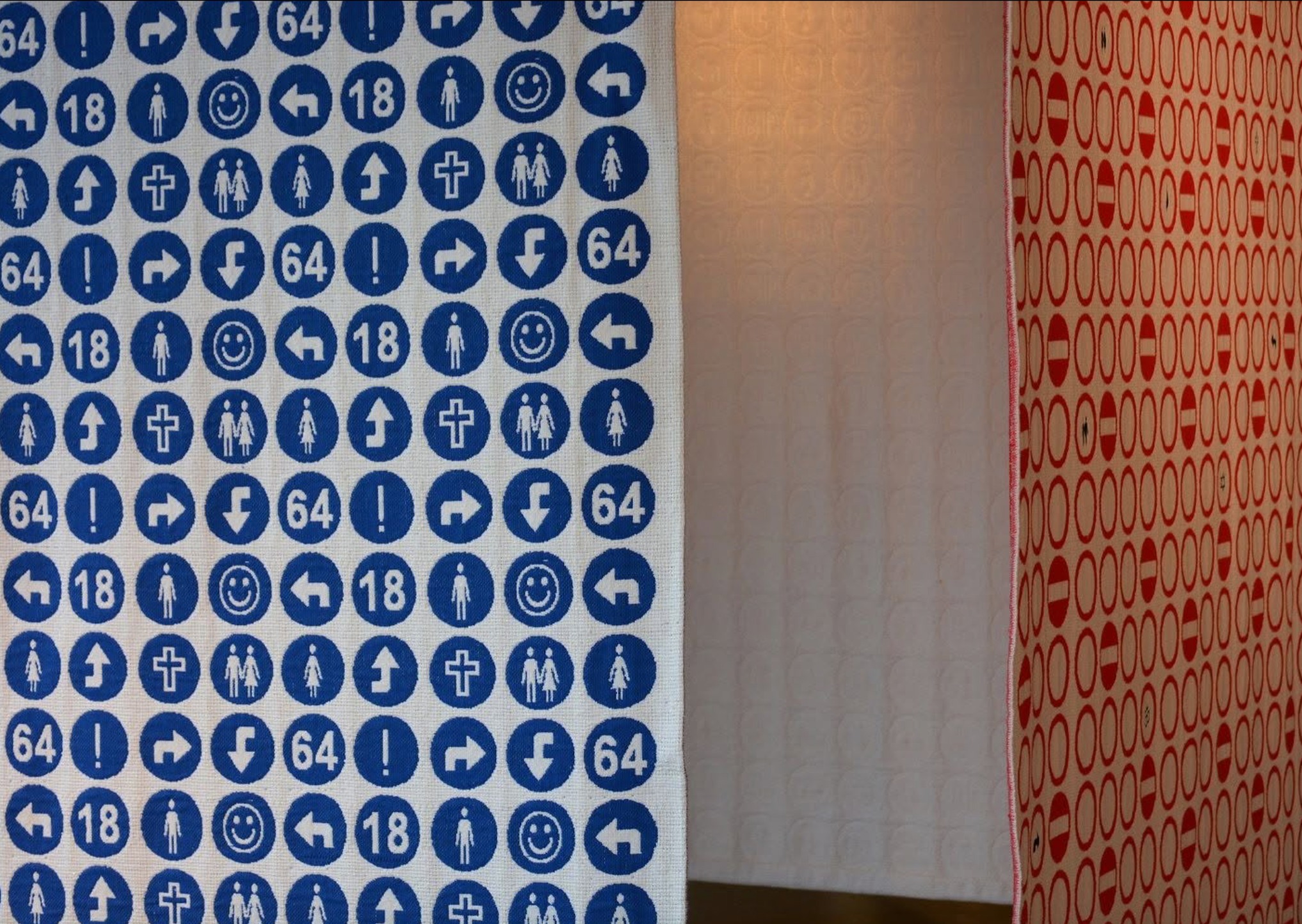
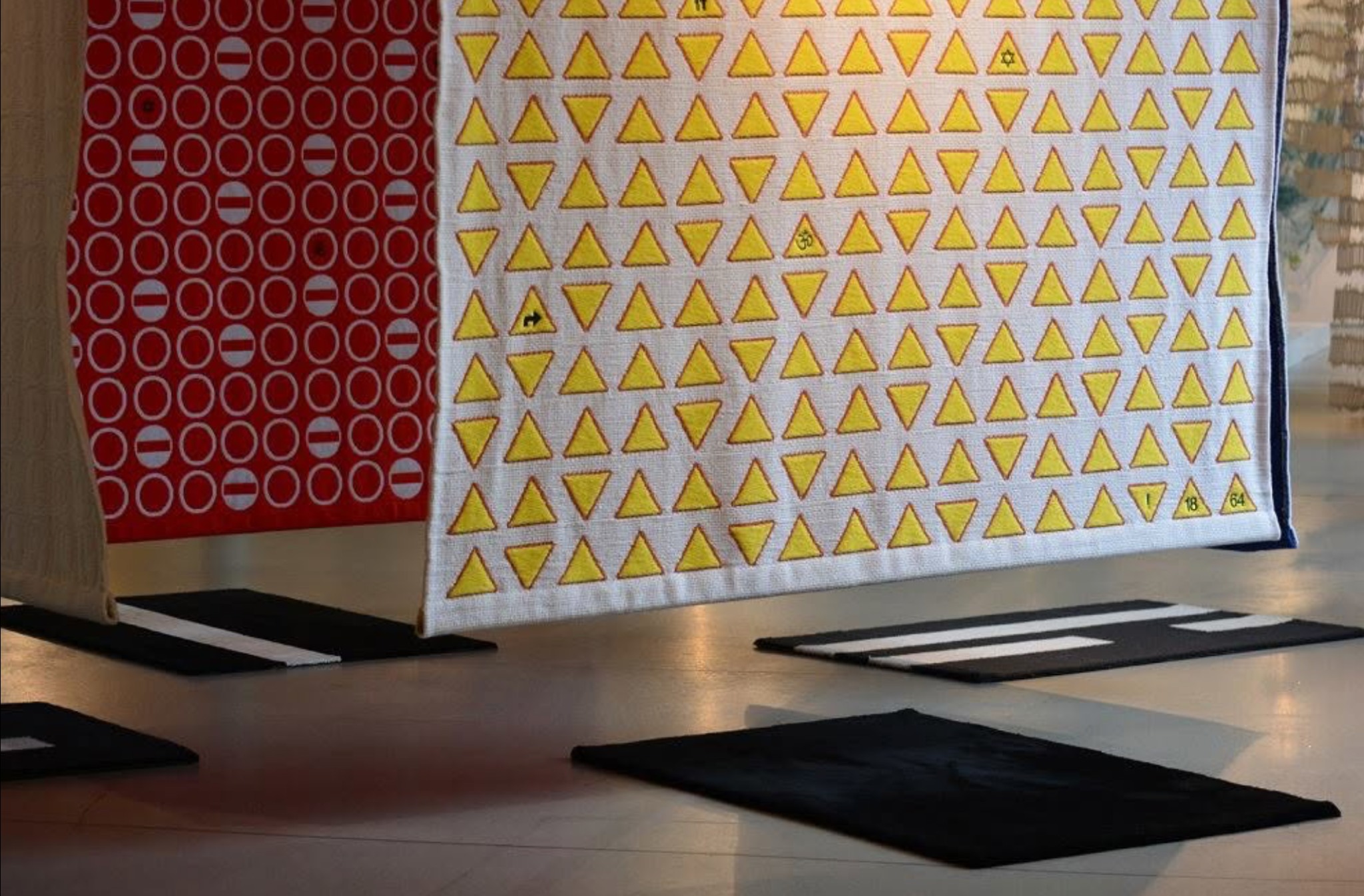
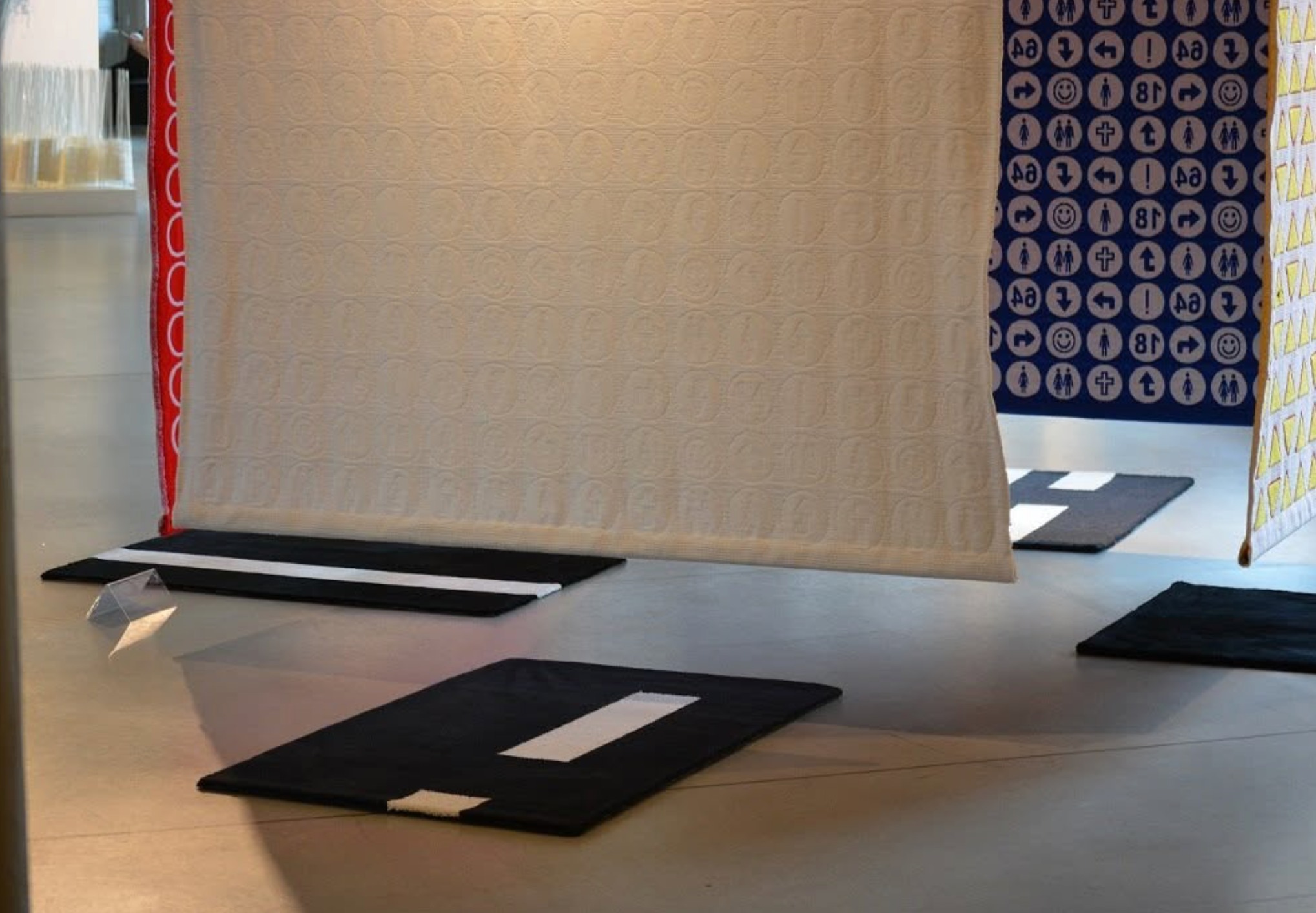
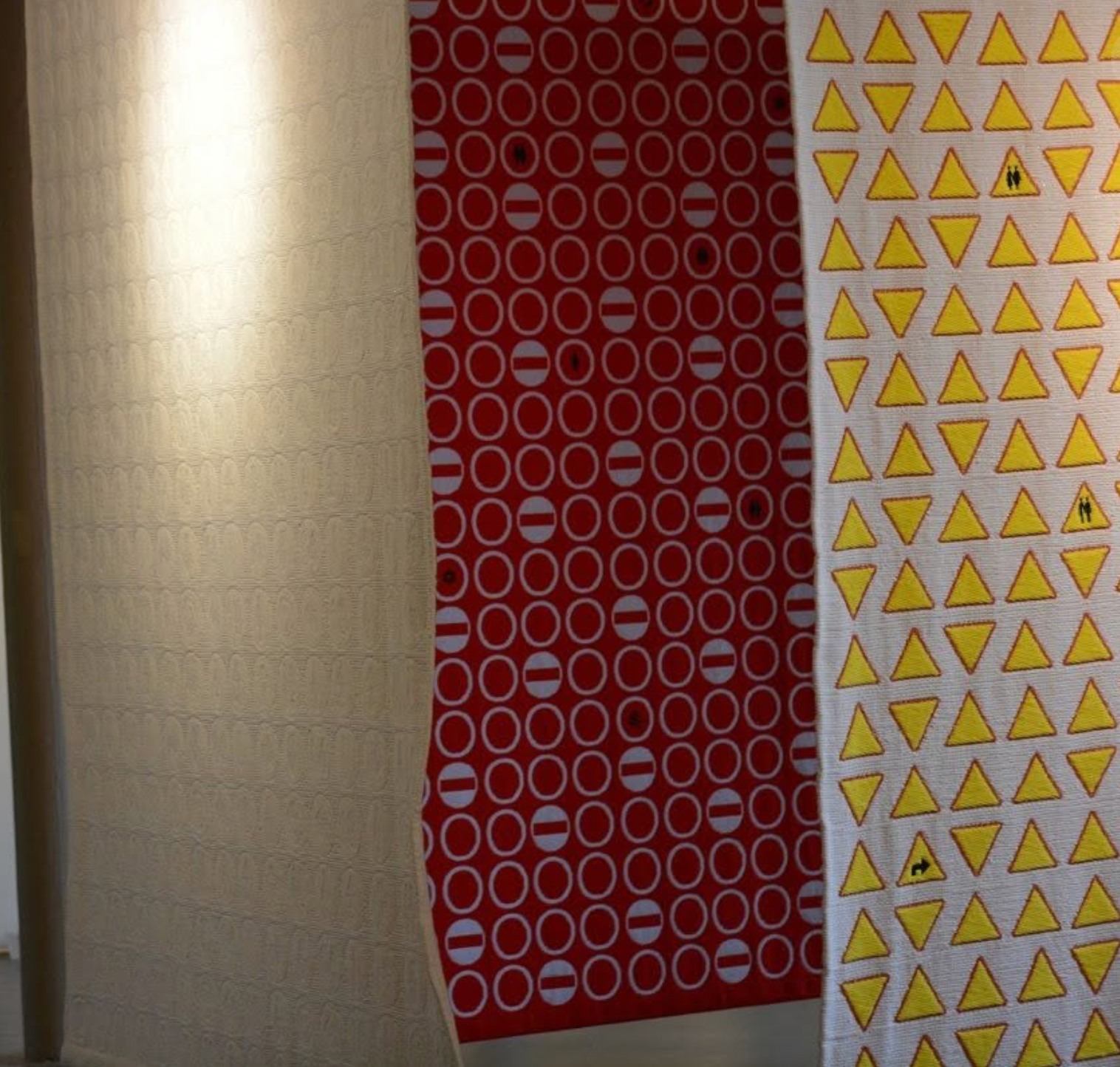
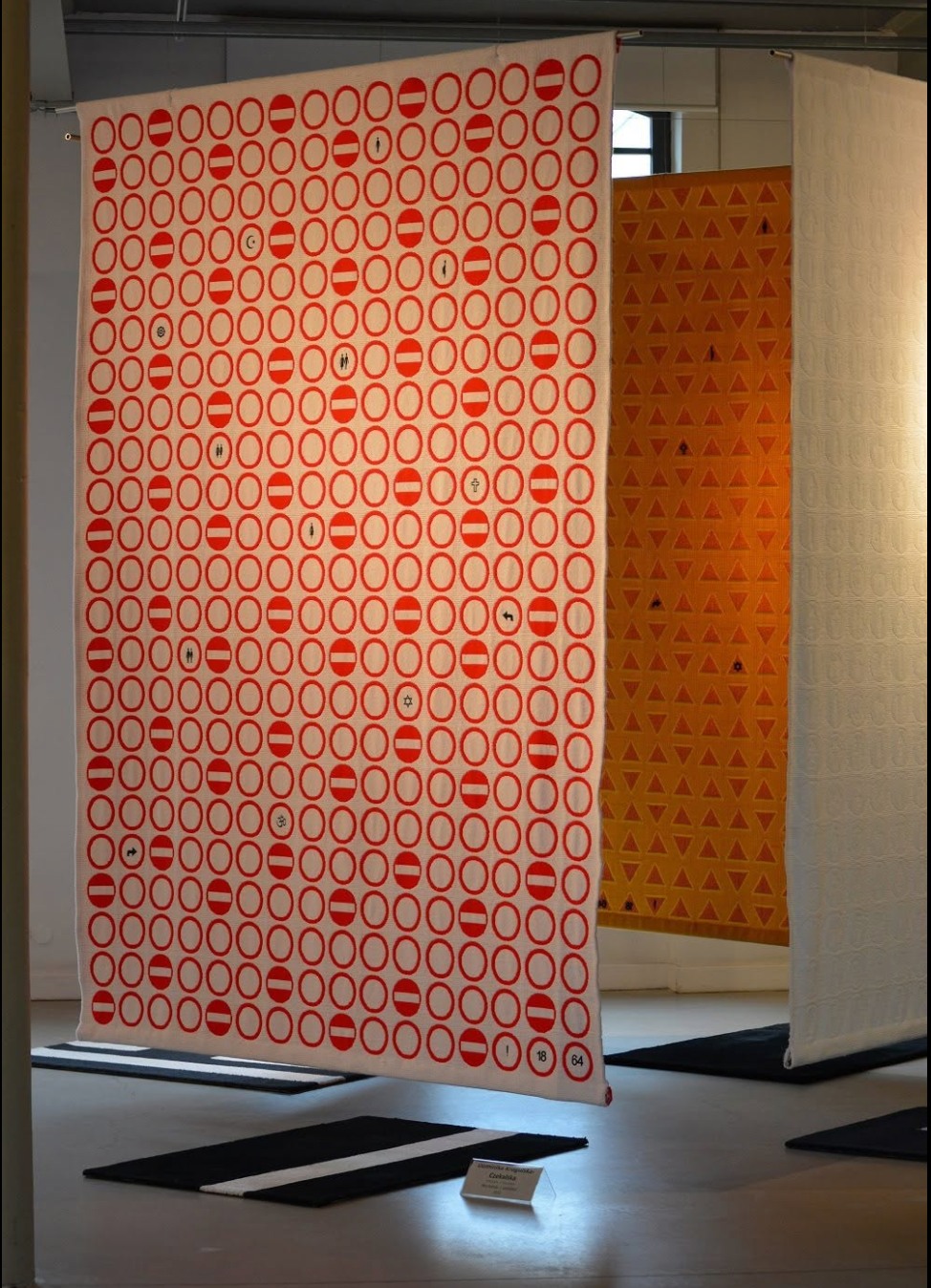
The works Będziesz!, Nie będziesz!, Uważaj!, Bez znaczenia and Imagine there’s no… (after John Lennon) examine how language acts when it becomes textile structure. Warning, prohibition, promise and negation are not simply written on the surface: they are materially produced through repetition, scale and weaving.
Prace Uważaj!, Nie będziesz!, Będziesz!, Bez znaczenia oraz Imagine there’s no… (za Johnem Lennonem) badają działanie języka przekształconego w strukturę tekstylną. Ostrzeżenie, zakaz, obietnica i negacja nie są jedynie zapisane na powierzchni: zostają materialnie wytworzone poprzez powtórzenie, skalę i splot.
Doctoral project · 2015 Exhibited at the 15th International Triennial of Tapestry · Central Museum of Textiles, Łódź · 2016
I follow a path along which I encounter signs, norms and regulations. I doubt, question and propose my own. Signs evolve. The colour codes of prohibition are linked to the code identifying the country I inhabit. Particularly in light of current changes, prohibitions in Poland are multiplying.
White and red are rarely paired in domestic interiors, so by proposing this combination I point to an order beyond the purely aesthetic. My signs are personal, yet they draw on a shared system of conventions and may therefore be universal. By universality, I mean the potential they hold. I do not presume to prohibit. Instead, by placing a symbolic image behind an existing sign, I seek to show the state of affairs as I see it. I have no power to abolish prohibitions, but I cross them out in my work, suggesting a possibility, an experiment.
My search for personal freedom takes place in a world of visual messages, which I materialise as functional textiles. Polish has no equivalent for the English term comfort cloth, yet what eludes the language exists in the world. In making a soft, patterned object, I want to wrap someone in my message. Once again, I try to make functional fabric extraordinary and the message ordinary,2 to bring values into contact with things.
I am a woman, but that is not my fault. Womanhood suits me. I am Polish, but that is not my fault. The natural world within Poland’s borders moves me and gives me respite. I am human. I ask questions and seek answers. I speak through designing and making.
The opening invokes Martin Heidegger’s concept of Being-in-the-world (In-der-Welt-sein). See Being and Time, translated by John Macquarrie and Edward Robinson (1962), §12. The following two lines are the artist’s own variations. In the Polish original, Bycie-obcym-w-świecie becomes Bycie-obcą-w-świecie: the grammatical shift from masculine to feminine makes the female subject explicit. English does not mark this distinction, so the two lines are deliberately identical in translation. ↩
An allusion to Stefan Morawski’s formulation concerning making the ordinary extraordinary and the extraordinary and mysterious ordinary. See Na zakręcie: od sztuki do po-sztuki (1985), p. 305. The wording here is the artist’s adaptation, rather than a quotation from an English translation. ↩
View gallery · 8 more photographs
Textile as a Medium of Critical Statement · Doctoral project, 2015. Installation views and details · 15th International Triennial of Tapestry · Central Museum of Textiles, Łódź, 2016.